


Stuck with an old concrete or gunite pool that just isn’t worth the effort anymore?
We get it. At some point, the maintenance, repairs, and ongoing costs can start to outweigh the enjoyment.
Through our time in the pool industry, we’ve seen many homeowners in this exact spot decide to remove, or even replace, their aging concrete pools.
We’ll touch on what replacing your pool could look like a bit later, but first, let’s break down what goes into your pool removal cost.
What are your options for getting rid of a concrete pool?
If you’ve decided your concrete pool has reached the end of the road, you typically have two main options:
- Full removal (demolition): The pool is completely broken up, removed, and replaced with compacted soil
- Partial removal (fill-in): The pool is partially demolished and filled in with dirt and debris
Both approaches can solve the problem, but they come with different costs, timelines, and long-term considerations.
What’s the difference between removing and filling in a pool?
The main difference comes down to how much of the pool is actually removed, and what that means for your yard later on.
With full removal, the structure is taken out entirely. This tends to give you more flexibility if you plan to build, landscape, or fully repurpose the space in the future.
Filling in a pool is generally faster and comes with a lower upfront cost, but it may come with some limitations. In some cases, homeowners consider things like soil settling or restrictions on building later.
Which option makes the most sense often depends on what you plan to do with your backyard after the project is complete, whether that’s building, landscaping, or simply creating a clean, open space.

How much does a concrete pool removal cost?
If you are ready to completely get rid of your concrete pool, the cost of a full removal tends to range between $8,000 to $20,000+.
That range can shift depending on a few key factors.
Access to your backyard is one of the biggest. If equipment can easily get in, the job is typically more straightforward. If not, costs can increase.
Other factors that may influence your pool removal cost include:
- The size and depth of your pool
- Local permit requirements
- Disposal and hauling fees
- Soil conditions and compaction needs
Because every property is a little different, it’s not unusual for estimates to vary more than expected.
Concrete pool removal process
If you’ve never seen it done before, removing a concrete pool is a fairly involved process.
In most cases, it includes breaking apart the concrete structure, cutting through rebar, and hauling away debris, often into a dumpster on-site. It’s typically loud, messy, and can create a fair amount of dust, which is one reason pool removal cost can add up.
To get the job done, contractors usually rely on equipment like:
- Excavators or skid steers
- Jackhammers or hydraulic breaker attachments
- Rebar cutting tools
- Soil compaction equipment
- Dumpsters for debris removal
While every project is a little different, the process often follows a general sequence:
- Drain the pool completely
- Remove the pump and disconnect gas and electrical lines
- Break apart the concrete shell using heavy equipment
- Cut and remove rebar as demolition progresses
- Sort and haul away debris
- Fill the space with dirt and topsoil
- Compact the soil to help reduce settling
- Rough grade the area for future use
If you’re considering helping with the work yourself, it’s important to use proper safety gear like ear and eye protection. That said, as mentioned earlier, this is typically a job best handled by experienced professionals.
Check out this video to see these steps in action:
How to plan for a concrete pool removal?
Before the equipment shows up, a little planning can go a long way in keeping your project running smoothly, and potentially avoiding unexpected delays or added costs.
- Clearing the area around the pool, including furniture, plants, and anything that might get in the way
- Making sure there’s enough access for heavy equipment, which may require temporarily removing sections of fencing
- Choosing a time for the project that won’t be too disruptive, pool removal can be loud, so giving neighbors a heads-up is often appreciated
- Checking with your local city or county about permits, since many areas require approval before demolition or fill-in work can begin
If you’re working with a contractor, they’ll often help coordinate permits and logistics. Still, having a general understanding of what’s involved can make the process feel a bit more manageable.
How long does a concrete pool demolition take?
This can vary by contractor, but in general, it can take between 3 and 7 days to completely remove a concrete pool and fill in the space with dirt.
Things like weather, yard access, and the complexity of the project all play a role. Some removals move quickly, while others take a bit more time depending on the situation.
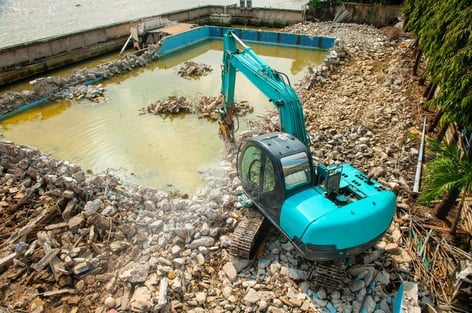
How much does it cost to fill in a concrete pool?
Your second option, as we mentioned at the beginning of this article, is to fill in your concrete pool. On average, it will cost you between $5,000 and $10,000+ to fill in your concrete swimming pool. The price will also depend on the contractor, the size of your pool, and the materials that you use to complete the work.
Filling in a concrete pool process
Filling in a pool shares some similarities with full removal, but there are a few key differences.
Instead of removing the entire structure, contractors usually break up a portion of the pool, often the top layer, and create drainage holes in the bottom.
From there, the pool is filled with a mix of debris and clean fill dirt, then compacted and graded.
The process is often quicker and may require less hauling, which is one reason the cost is typically lower. That said, planning still matters, especially when it comes to drainage and how you plan to use the space later.
What does it look like to replace a concrete pool instead?
If you still like the idea of having a pool in your backyard, replacing it may be worth considering alongside your pool removal cost.
In many cases, the old concrete pool is removed, but instead of ending up with an empty yard, a new pool is installed in its place. You'll get to choose between a vinyl liner and a fiberglass swimming pool.
Some homeowners explore vinyl liner pools, which may come with a lower upfront cost but can require more maintenance over time.
Others consider fiberglass pools, which are known for their durability and lower maintenance needs. Many fiberglass pool projects may range from $85,000 to $200,000 or more, depending on size, features, and site conditions.

So, what’s the right move for your backyard?
Deciding what to do with an aging pool isn’t always straightforward.
For some homeowners, removing the pool and starting fresh makes the most sense. For others, replacing it creates a better long-term experience.
Either way, understanding your pool removal cost, and what each option involves, can help you move forward with a clearer plan.
Frequently Asked Questions
What is the average concrete pool removal cost?
The average pool removal cost for a concrete pool typically ranges from about $8,000 to $20,000 or more for full removal.
How long does it take to remove a concrete pool?
Most concrete pool removal projects take somewhere between three and seven days, although timelines can vary. Factors like weather, equipment access, and the complexity of the job can all influence how long the process takes.
How much does it cost to fill in a concrete pool?
If you’re considering filling in the pool instead, costs may fall closer to $5,000 to $10,000+. Pricing can vary depending on factors like pool size, access to your yard, and local requirements.
What is the difference between partial pool removal and full removal?
Partial removal (fill-in) involves breaking up part of the pool and filling it with dirt and debris, while full removal takes out the entire structure and replaces it with compacted soil. Full removal usually comes with a higher pool removal cost, but it may offer more flexibility for future use of the space.
Can you build on top of a filled-in pool?
In some cases, building on top of a filled-in pool may be possible, but it often requires evaluation by an engineer. Because the area was previously excavated and filled, additional steps may be needed to ensure the ground is stable enough for construction.
How much does it cost to replace a concrete pool with a fiberglass pool?
Replacing a concrete pool with a fiberglass pool typically involves removing the existing structure and installing a new shell. Many fiberglass pool projects may range from $85,000 to $200,000 or more, depending on size, features, and site conditions. Fiberglass pools are installed by independently owned and operated companies.

From the Author
Getting rid of a concrete pool can be a big decision, especially when you’re trying to understand the pool removal cost and what your options really are.
I’m Jason Hughes, a partner at River Pools Virginia with more than 25 years of hands-on experience. Over the years, I’ve worked with many homeowners who are trying to weigh the concrete pool removal cost, understand their options, and figure out what to do next.
In this article, I’ve shared what I’ve seen firsthand to help you better understand the process and how it compares to alternatives like filling in or even replacing the pool. My goal is to help you choose the path that fits your backyard and your goals.
From the Manufacturer
At River Pools, we’ve worked with homeowners across the country who are trying to figure out what to do with an aging concrete pool, whether that means removing it, filling it in, or starting fresh.
Through those conversations and our network of independent installers, we’ve seen how decisions around pool removal cost often connect to bigger questions about how a backyard will be used moving forward.
Resources like this are meant to give you a clearer picture of your options so you can make a confident, informed decision.
If you’re considering replacing your pool with a fiberglass pool and want to explore what that could look like in your backyard, the next step is connecting with a trusted independent installer in your area.
Ready to start the conversation?

