

Quick Summary
- Concrete pool installation typically takes 3–6 months, significantly longer than fiberglass pools which install in weeks
- Homeowners must spray down the pool surface 2–3 times daily for 28 days during the curing process
- Concrete pools are the most expensive inground option, starting around $85,000 and often exceeding $200,000
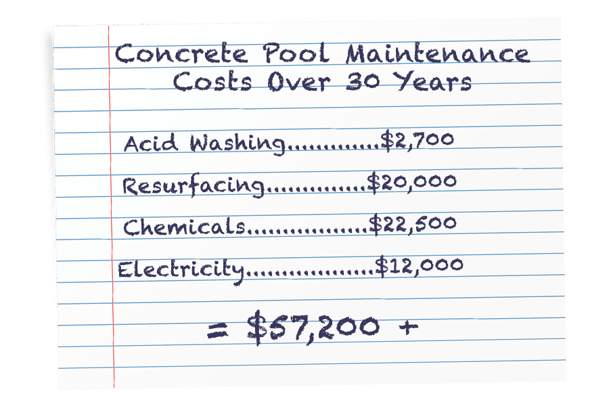
- Long-term maintenance costs can exceed $50,000 over 30 years due to resurfacing every 10–15 years, chemicals, and electricity
- Porous plaster surfaces require weekly steel brush scrubbing and are more prone to algae than fiberglass or vinyl liner pools
- Salt systems, rough surfaces, and the risk of pool flotation are additional ownership considerations most homeowners don't discover until after installation
Do you have plans for a concrete pool installation?
First of all, congratulations on taking the first steps toward building a swimming pool for your home. A backyard pool can create years of memories for family and friends, and for many folks, it’s a lifelong dream come true.
But before moving forward with your concrete pool installation, it’s important to understand exactly what comes with owning and maintaining a concrete pool long term.
As one of the largest educational resources in the swimming pool industry, we’ve talked with thousands of pool owners over the years. In this article, we’ll walk you through some of the biggest things homeowners wish they had known before building a concrete pool.
Now let’s take a closer look at each one.
1. Concrete Pool Installation Takes Time
A concrete pool installation, which typically involves the gunite process, can take anywhere from 3 to 6 months on average, and it can drag on longer if the weather is unfavorable or your builder runs into delays.
And even if you're not in a rush to get your pool in the ground before the next swim season, your yard is going to be in total disarray with a team of workers continually coming and going.
Concrete pool construction is also loud. The air compressors that are used to apply the concrete to the rebar frame can go above 85 decibels, which can damage your hearing. Lucky for you, that phase only lasts a few days, but the construction is still noisy overall.
2. Concrete Pool Installation Is More Hands-On Than Many Homeowners Expect
Even if you’re hiring a professional builder, a concrete pool installation can still require homeowner involvement during the curing process. Specifically, most concrete pool owners have to spray down their concrete pool surface 2-3 times a day for 28 days while the concrete is curing.
Typically, your pool builder will expect you to do this part since going to your home several times a day can become costly for you and time-consuming for them, especially if they have other projects to work on.
For some homeowners this isn’t a big deal. For others, it can come as an unwelcome surprise.
3. Concrete Pools Are the Most Expensive Inground Pools to Build
A concrete pool installation is typically the most expensive type of inground pool installation due to labor, materials, construction time, and customization.
Concrete pools often start around $85,000 and can easily exceed $200,000 depending on:
- pool size
- finish materials
- features
- automation
- decking
- water features
- excavation complexity
Now, if you love the look of a highly customized concrete pool, the added cost may absolutely be worth it to you. But if your budget is already feeling stretched thin, it’s important to know that concrete isn’t your only option.
Vinyl liner pools generally cost less upfront than concrete pools, though they come with their own long-term considerations. Fiberglass pools usually cost less than concrete pools overall and often require less maintenance over time.
4. Concrete Pools Can Be Expensive to Maintain
One of the biggest long-term costs associated with concrete pool installation is maintenance.
Concrete pool surfaces are typically finished with plaster, aggregate, or tile. Plaster is the most common option because it’s affordable and widely used, but it’s also porous and can create ongoing challenges with water chemistry and surface upkeep.
Because of this porous surface, concrete pools often require:
- more brushing
- more chemical use
- longer filtration cycles
- higher electricity usage
Resurfacing is another major long-term expense. Most concrete pool surfaces eventually need resurfacing every 10–15 years depending on water chemistry, climate, and maintenance habits.
When you combine the costs of acid washing, resurfacing, chemicals, and electricity, concrete pool maintenance costs can easily exceed $50,000 over a 30-year period.
Of course, actual costs vary based on pool size, climate, local utility rates, and whether you maintain the pool yourself or hire a service company.
5. Concrete Pools Can Pop Out of the Ground
Yes, any pool can float, but there's a widespread misconception that concrete pools can't float because they're too heavy. This is far from the truth, and we want you to be aware of this possibility before you build your pool so that you can avoid this type of catastrophic damage.
A properly engineered concrete pool installation should include hydrostatic relief measures to help protect the pool from groundwater pressure, especially in areas with high water tables.
To help prevent this kind of damage:
- make sure your builder installs a hydrostatic relief valve
- avoid draining the pool unnecessarily
- consult a pool professional before emptying the pool
Thankfully, pool floating is relatively uncommon, but it’s still important to understand the risk before building.

6. Concrete Pools Are More Prone to Algae
Let's be clear, you will have to deal with algae at some point no matter what type of pool you choose. If you decide to go with concrete, it will likely be more difficult to get rid of algae.
Like we said, plaster is porous and bumpy, and it creates the perfect atmosphere for algae to thrive. Concrete pool walls require weekly brushing with a steel brush, lots of filtration time, and the right amount of chlorine to keep the algae at bay. Skip out on these chores, and you'll be sure to have a green pool in no time.
This time-intensive maintenance is one reason why so many concrete pool owners choose to hire pool maintenance professionals to take care of their weekly chores. A pool servicer will make your life easier, but it can come at a cost of about $2,000 to $3,000 per year depending on how long your pool is open for the season.
7. Salt Water Can Wear Down Concrete Pool Surfaces Faster
Thinking about using a salt system for your pool? Salt is abrasive, and over time it can wear away at your pool plaster. The salt won't directly harm the plaster as concrete pools and salt systems are compatible, but it can speed up normal wear and tear, which might mean that you need to resurface your pool more often.
Why do we focus on plaster so much if there are other concrete pool surface options?
Because plaster remains the most common and affordable finish used in concrete pool installation projects. Aggregate finishes tend to last longer, but they still contain plaster underneath. Tile is another option and offers a smoother finish, but it’s also significantly more expensive.
Read more: Are Salt Water Systems Bad for Concrete Pools?
8. Concrete Pool Surfaces Are Rough
Have you ever scraped your toe on the wall or floor of a swimming pool? Yeah, that doesn't happen in vinyl liner and fiberglass pools, but concrete pools are almost guaranteed to give you scrapes at some point.
Both plaster and aggregate surfaces can be rough for walking and sitting, and exposed pebbles can be uncomfortable on the feet, especially if they're large. Tile is a much smoother surface, but it's also very expensive (we're talking up to $50 or more per square foot).
If a Concrete Pool Installation Doesn’t Feel Right for You, Here Are Your Other Options
Concrete pools can be beautiful and highly customizable, but they aren’t the perfect fit for every homeowner.
If concerns like:
- long construction timelines
- resurfacing costs
- algae maintenance
- higher long-term ownership costs
…give you pause, there are still other inground pool options worth considering.
Here’s a quick overview of fiberglass and vinyl liner pools.
Vinyl Liner Pools
Vinyl liner pools are waterproofed using a vinyl liner and are generally considered the least expensive inground pool option upfront.
Vinyl pools are comfortable for walking and sitting and smooth to the touch, but they can also tear easily, which can lead to leaks.
They require regular liner replacements, which can get costly, but it's not as expensive as maintaining a concrete pool.
Read more about the pros and cons of vinyl pools here.
Fiberglass Pools
Fiberglass pool installations are typically much faster than concrete pool installations because the pool shell arrives at the home premanufactured and ready to install. In many cases, fiberglass pools can be installed in a matter of weeks rather than several months.
Fiberglass pools usually cost less than concrete pools overall, though they’re often more expensive upfront than vinyl liner pools. However, they tend to have the lowest long-term maintenance costs of the three.
The surface of a fiberglass pool is smooth, durable, and nonporous, which makes it more resistant to algae growth than concrete. Because of this, fiberglass pool owners often spend less on chemicals, brushing, and electricity over time.
And unlike concrete pools, fiberglass pools typically don’t require resurfacing throughout the life of the pool when properly maintained.
You can read more about the pros and cons of fiberglass pools here.

Final Thought on Concrete Pool Installation
A concrete pool installation can be a great choice for homeowners who want maximum customization and don’t mind the added maintenance and long-term costs that come with it.
But like any major backyard investment, the more informed you are before construction begins, the better your experience will likely be.
If you’re still comparing fiberglass, vinyl liner, and concrete pools, we recommend researching the pros, cons, installation timelines, and lifetime ownership costs of each before making a final decision.
At the end of the day, the best pool for your family is the one that fits your budget, lifestyle, and long-term expectations.
Frequently Asked Questions
How long does it take to install a concrete pool?
A concrete pool installation usually takes about 3–6 months from excavation to completion, though timelines can vary based on weather, permits, material availability, and the complexity of the design.
How much does it cost to maintain a concrete pool?
Concrete pools are typically the most expensive inground pools to maintain. Over a 30-year period, maintenance costs can exceed $50,000 when you factor in resurfacing, chemicals, electricity, acid washing, and professional pool service. Actual costs will vary based on pool size, climate, utility rates, and how well the pool is maintained.
Why do concrete pools get algae so easily?
Concrete pools are more prone to algae because their plaster surfaces are porous and rough. Algae can attach more easily to these surfaces, which means concrete pools usually need more brushing and chemical maintenance to stay clean.
Can a concrete pool pop out of the ground?
Yes, a concrete pool can float or “pop” out of the ground if groundwater pressure builds up underneath the pool. This is why proper drainage and hydrostatic relief valves are important during concrete pool installation.

From the Author
Building a pool is a big investment, and many homeowners start researching concrete pool installation because they love the design flexibility and custom look concrete pools can offer. But over the years, I’ve found that a lot of families don’t fully understand the long-term maintenance, costs, and construction process that come with concrete pools until they’re already deep into the buying process.
I’m Marcus Sheridan, co-founder of River Pools Virginia, and for more than 20 years I’ve helped homeowners research and compare inground pool options. I wrote this article to give homeowners a clearer picture of what to expect before moving forward with a concrete pool installation so they can move forward feeling confident and informed.
From the Manufacturer
At River Pools, we’ve helped homeowners compare inground pool options for more than 20 years, and one thing we’ve learned is that the best pool decision is usually the most informed one.
That’s why we create educational resources like this article: to help families understand the things they should know before moving forward with a concrete pool installation, including the long-term costs, maintenance requirements, and construction realities that can sometimes get overlooked early in the buying process.
If you’re still comparing concrete, fiberglass, and vinyl liner pools, speaking with a trusted independent installer can help you better understand which option may fit your backyard, budget, and long-term goals. They can walk you through installation timelines, design possibilities, and what ownership may realistically look like over time.
Ready to start the conversation?

