

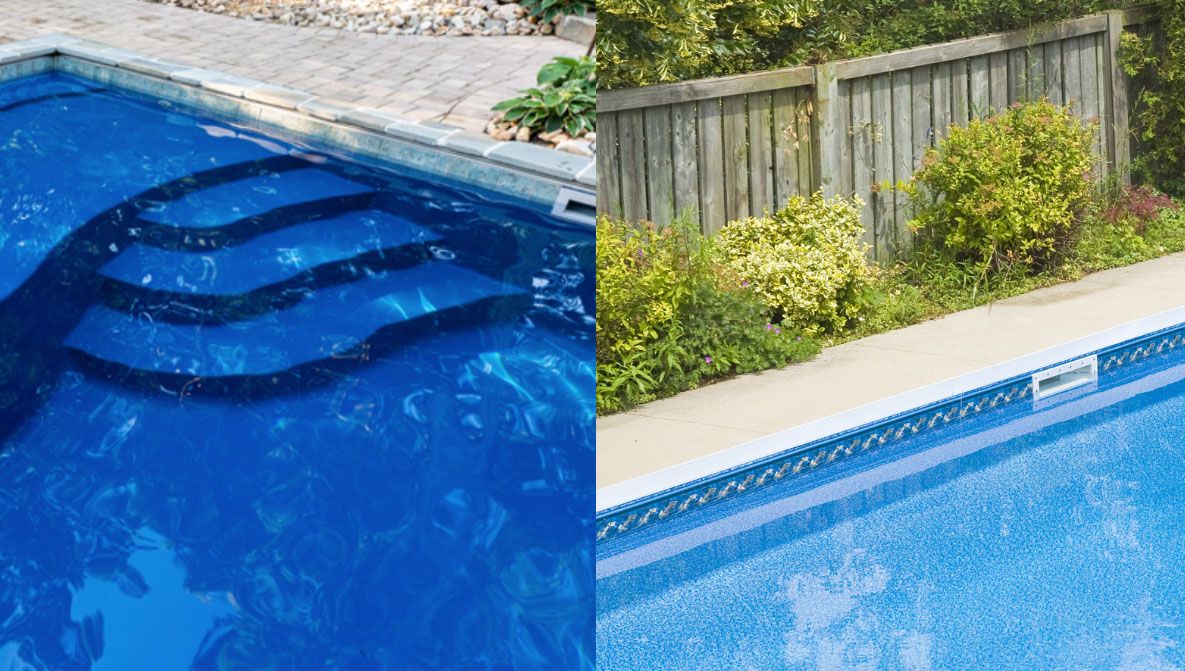
If you’ve started researching inground pools, you’ve probably noticed that fiberglass pools and vinyl liner pools are often compared side-by-side.
And one of the first questions homeowners ask is simple:
Which one costs less?
At first glance, vinyl liner pools often appear to be the more affordable option. But the true cost of a pool isn’t just about the initial installation price.
Long-term maintenance, liner replacements, and upkeep can all affect what you ultimately spend over the life of the pool.
In this guide, we’ll break down what fiberglass and vinyl liner pools typically cost, from upfront installation to long-term ownership. Keep in mind these are general ranges, and pricing can vary depending on factors like location, yard conditions, and project scope.
How Much Does a Fiberglass Pool Cost Compared to Vinyl?
For many homeowners, the initial installation cost is the starting point when comparing pool options.
In most markets today, a vinyl liner pool generally costs less upfront than a fiberglass pool.
Typical price ranges:
-
Fiberglass pool installation: Usually ranges from $85,000–$200,000
-
Vinyl liner pool installation: Usually ranges from $45,000–$100,000
The difference largely comes down to how the pools are manufactured and installed. Fiberglass pools are built as a one-piece shell in a controlled factory environment, which can increase the initial cost compared to a vinyl pool that is constructed on site.
However, installation price is only part of the overall financial picture.

Which Pool Has Lower Long-Term Maintenance Costs?
Both pool types require regular maintenance, including chemicals, filtration, and cleaning.
However, the surface of each pool behaves differently.
Vinyl liner pools use a vinyl membrane surface, which is relatively smooth but can still allow algae to cling over time and grab the seams of the liner.
Fiberglass pools have a non-porous gelcoat surface, which tends to resist algae buildup more effectively.
For some homeowners, this can translate to:
- Less brushing
- Slightly lower chemical use
- Less routine surface cleaning
While maintenance costs vary depending on climate and usage, many homeowners report lower overall maintenance effort with fiberglass surfaces over time.
What Does Vinyl Liner Replacement Cost Over Time?
One of the biggest cost differences between vinyl liner pools and fiberglass pools comes later down the line.
Vinyl liners typically last about 5–9 years, though lifespan can vary depending on maintenance, climate, sun exposure, and how the pool is used.
Today, replacing a vinyl pool liner often costs somewhere in the $5,000–$8,000 range, depending on the pool and local labor costs.
Over a 20-year ownership period, some homeowners may replace the liner two to four times, which could add roughly $10,000–$32,000 to the total cost of the pool depending on timing and pricing in their area.
Fiberglass pools do not use liners, so this particular replacement expense generally isn’t part of long-term ownership.
Long-Term Cost Comparison
Looking beyond the initial installation price, it can also be helpful to consider what ownership costs may look like over time.
Below is a simplified 10-year example based on typical maintenance and replacement costs.
Fiberglass pool
- Upfront installation: $85,000–$200,000
- Liner replacements: $0
- Estimated 10-year investment: $85,000–$200,000
Vinyl liner pool
- Upfront installation: $45,000–$100,000
- Liner replacements: About $7,125
- Estimated 10-year investment: $52,125–$107,125
Of course, these numbers can vary depending on location, yard access, patio size, landscaping, and the features included in the project. They also do not include ongoing expenses such as chemicals, equipment maintenance, or optional services like professional pool cleaning.
But when homeowners look at costs over many years of ownership, the comparison between vinyl and fiberglass often becomes less about the initial price and more about how those long-term expenses may add up over time.
So Which Pool Is Cheaper?
When it comes to which pool is “cheaper,” it often depends on how you look at the costs. Vinyl liner pools usually come with a lower upfront installation cost.
Fiberglass pools, on the other hand, may have a higher initial investment but typically avoid expenses like liner replacement over time.
For some homeowners, the decision ultimately comes down to balancing upfront affordability with long-term ownership costs. Understanding how those costs may unfold over time can help you choose the option that best fits your budget and expectations.

Frequently Asked Questions
Is a vinyl liner pool cheaper than fiberglass?
Vinyl liner pools are typically cheaper upfront. However, liner replacements over time can increase the long-term cost of ownership.
How often does a vinyl pool liner need to be replaced?
Most vinyl liners typically last 5–9 years before they need replacement, though lifespan can vary depending on maintenance, climate, and usage.
How much does it cost to replace a vinyl pool liner?
Vinyl liner replacement usually costs between $5,000 and $8,000, depending on pool size and labor costs in your region.
Do fiberglass pools require resurfacing?
If maintained properly, fiberglass pools typically do not require resurfacing like concrete pools or liner replacement like vinyl pools. The gelcoat surface is designed to last for many years with proper maintenance.
From the Author
My name is Marcus Sheridan, and I’m a co-founder of River Pools® Virginia. For more than two decades, I’ve worked directly with homeowners researching and installing inground pools, helping families understand the real differences between pool options so they can make confident decisions.
Over the years, I’ve had thousands of conversations with people comparing fiberglass and vinyl liner pools, especially when it comes to cost. My goal with articles like this is to provide clear, honest information so you can understand not just the upfront price of a pool, but what ownership may look like over time.
From the Manufacturer
At River Pools, we regularly work with homeowners comparing different inground pool options, including fiberglass and vinyl liner pools. Articles like this are designed to provide clear, straightforward information so you can evaluate your options with confidence.
If you're exploring the cost of a fiberglass pool and want to understand how it might fit your backyard and budget, the next step is connecting with a trusted independent installer in your area.
They can walk through design options, evaluate your yard, and help you plan a project that fits your goals.
Ready to start the conversation?

Topics:
