

.jpg?width=1728&height=1152&name=03%20plumbing%20straps%20(2).jpg)
My journey in the pool industry began at 15 as a laborer for a small family-owned business, where I quickly learned that experience matters—especially when you’re sent to find a “wall stretcher” that doesn’t exist.
Since co-founding my installation company, River Pools® Virginia, in 2001, I’ve helped install over 1,000 fiberglass pools, learning firsthand what works and what doesn’t. We’ve made mistakes along the way, each one a “sin” in the world of pool installation, costing time, money, and stress. But each misstep taught us how to improve and build pools that last.
In this guide, I’ll share the 7 most common (and costly) sins of fiberglass pool installation, along with the key best practices we’ve developed to avoid them. Whether you’re a homeowner planning a pool or a contractor looking to improve your craft, these lessons can help you avoid costly mistakes down the road.
1. Poor-Quality Cantilevered Concrete Coping in Fiberglass Pools
No matter how well a pool is installed, poor cantilevered concrete coping can ruin the look and longevity of your project. We learned this the hard way, and over time, we developed clear best practices for securing forms and placing concrete to ensure a smooth, durable finish.
Key best practices:
- Use double the ties recommended by the form manufacturer.
- Use tape to support bends and tight corners.
- Tap the forms to vibrate the concrete and bring cream to the surface for a smooth finish.
2. Skipping a Dewatering System During a Fiberglass Pool Installation
A dewatering system prevents hydrostatic pressure damage by allowing groundwater to be removed before draining a pool. Without it, water pressure outside the shell can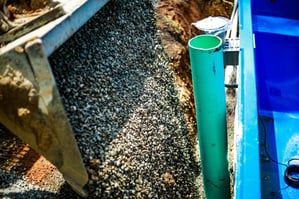 damage the pool if there’s less water inside than outside.
Key best practices:
-
Install an 8-inch PVC dewatering pipe surrounded by gravel during the fiberglass pool installation to provide groundwater access if the pool ever needs to be drained.
-
Learn how hydrostatic pressure affects fiberglass pools.
3. Poor Plumbing Practices Around Fiberglass Pools
Plumbing mistakes are one of the most common causes of long-term fiberglass pool installation problems. Poorly supported plumbing or improperly installed pipe can lead to leaks, settlement, and costly repairs beneath the patio.
We often see three critical plumbing mistakes:
- Not pressure testing lines before pouring the patio.
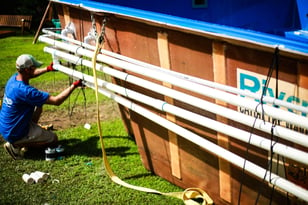
- Failing to secure the plumbing to prevent settlement.
- Using flexible PVC instead of rigid PVC, despite flexible PVC not being rated for underground use.
Key best practices:
- Pressure test plumbing lines before pouring the patio.
- Secure plumbing to prevent settlement over time.
- Use rigid PVC instead of flexible PVC for underground plumbing.
- Heat-bend rigid PVC to contour the pool while maintaining strength.
- Secure plumbing to the pool shell with cables for added stability.
If groundwater ever needs to be removed, the dewatering pipe can also provide easy pump access through the skimmer area.
4. Using Sand as Base and Backfill Material
While sand is viewed as an acceptable material by many installers and some manufacturers, it liquefies when saturated, leading to:
- Settlement of the pool shell.
- Bulging pool walls.
- Plumbing settlement and leaks.
Key best practice:
- Use clean crushed gravel as base and backfill material to prevent settling, wall bulging, and plumbing movement.
Unlike sand, crushed gravel compacts immediately and remains stable even when exposed to groundwater.
Head over to our installation page to learn more about proven fiberglass pool installation methods

5. Ignoring Step and Wall Support During Installation
Fiberglass steps and benches can sag over time without proper support. Similarly, straight pool walls can bow without proper monitoring.
Key best practices:
- Support steps and tanning ledges with CMU blocks during installation.
- Pour concrete beneath steps and benches to keep them level long term.
- Use a string line during backfilling to monitor and maintain straight wall alignment.
Taking time to properly support these areas during the fiberglass pool installation process helps maintain the pool’s structural integrity and appearance for years to come.
6. Building Up Patios with Loose Dirt
Using loose dirt to build up patio areas around a fiberglass pool installation is a recipe for future settlement and cracking. As the soil settles over time, patios can shift, crack, and create uneven surfaces around the pool.
Key best practice:
- Use a turn-down concrete slab that extends to ground level for long-term patio stability.
This method creates a much stronger foundation, especially in backyards with slopes or elevation changes.
7. Improper Pool Leveling Methods
The only way to ensure a fiberglass pool is level long-term is to set it right the first time. Adding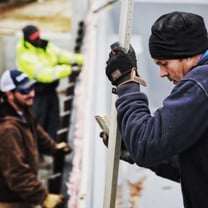 material under a pool to adjust its level often leads to uneven settling.
Key best practice:
- Take the time to properly set and level the pool during initial placement on a stable, undisturbed foundation.
A correctly leveled pool helps ensure long-term performance, structural stability, and a better overall finish.
How Can You Avoid Costly Fiberglass Pool Installation Mistakes?
A fiberglass pool installation is a major investment, and the quality of the installation process plays a huge role in how well the pool performs over time. Issues like poor plumbing, improper backfill, inadequate support, or incorrect leveling can lead to expensive repairs and unnecessary frustration down the road.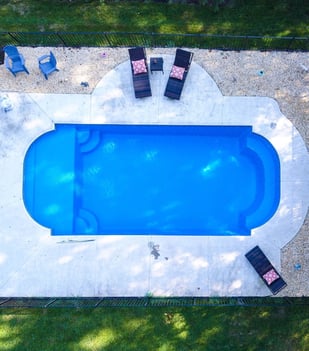
The good news is that these mistakes are avoidable when the right installation methods and materials are used from the beginning.
If you’re planning a fiberglass pool project, working with an experienced installer and understanding these best practices can help ensure your pool is built to last.

Frequently Asked Questions
What is the best base material for a fiberglass pool?
The best base material for a fiberglass pool is clean crushed gravel. It compacts immediately, won't shift when wet, and prevents issues like wall bulging and plumbing settlement.
Do I need a dewatering system for my fiberglass pool?
Yes, a dewatering system helps prevent hydrostatic pressure damage by allowing you to remove groundwater before draining your pool, protecting your investment long-term.
Is flexible PVC good for fiberglass pool plumbing?
No, flexible PVC is not recommended for underground use despite its popularity. Rigid PVC, heat-bent to contour the pool, is stronger and more durable for fiberglass pool plumbing.
How can I avoid settlement under my pool patio?
Avoid using loose dirt to build up patios. Instead, use a turn-down slab so the concrete extends to ground level, providing a stable, long-lasting base that prevents settlement and cracking.
Why is proper pool leveling important?
Proper leveling ensures your fiberglass pool stays stable over time. Adjusting the level after placement can lead to uneven settling, so it's critical to set it correctly on a stable foundation during initial installation.
From the Author
A fiberglass pool installation can look great on the surface, but the long-term performance of the pool often comes down to the installation details homeowners never see.
I’m Jason Hughes, a partner at River Pools Virginia and a fiberglass pool installer with more than 25 years of hands-on experience in the pool industry. Over the years, I’ve helped install more than 1,000 fiberglass pools and have seen firsthand how small installation mistakes can turn into expensive problems later on.
I wrote this article to share some of the most common fiberglass pool installation mistakes we’ve encountered over the years, along with the best practices our team uses to help avoid them. My goal is to help homeowners better understand the installation process so they can avoid costly mistakes and feel more confident throughout their pool-buying journey.
From the Manufacturer
At River Pools, we design and manufacture fiberglass pool shells, but we care just as much about how those pools are installed.
Over the years, we’ve worked closely with independent installers across the country and have seen how details like proper backfill, plumbing support, leveling, and site preparation can directly impact the long-term performance of a pool.
If you’re considering a fiberglass pool and want guidance specific to your backyard and goals, the next step is connecting with a trusted independent installer in your area.
Ready to start the conversation?

Topics:
