


So, you’ve decided on a rectangular fiberglass pool, great choice!
Now comes the real question: which one is actually the best fit for your backyard?
At this stage, it’s not about shape anymore, it’s about the details. Size, depth, swim space, and features all play a role in how your pool functions once it’s installed.
And those details matter more than most people expect.
In this guide, we’ll walk through the key things to look for so you can choose a rectangular pool design that not only looks great, but works the way you want it to day in and day out.
What should you look for in a rectangular fiberglass pool design?
- Swim Space
- Pool Depth
- Exercise and Lap Swimming
- Compatibility with Automatic Covers
- Step and Bench Configuration
1. How much swim space do you want?
When comparing rectangular fiberglass pools, it’s important to look beyond the overall size and consider how much of the pool is actually usable for swimming and playing.
Some designs simply give you more open space to move around, which can make a huge difference.
If you’re picturing games, having multiple people in the water, or just wanting room to spread out, that usable swim area is worth paying attention to.

2. What depth do you want for your pool?
When it comes to pool depth, it really depends on how you plan to use the pool.
Most designs fall into one of two categories: play pools and diving pools.
Diving pools are typically 8 feet deep or more and are required if you want a diving board. They have a transitional bottom, meaning there’s a shallow end, a steep slope, and then a defined deep end. The tradeoff is that much of the pool ends up too deep to stand in, which can limit games and everyday use.
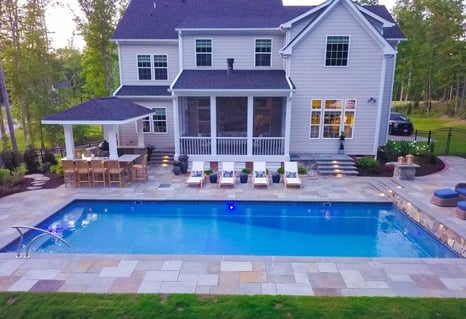 Our T40 model with a deep end of 8’6”
Play pools, on the other hand, are usually around 5 to 5.5 feet deep with a gradual slope. This makes them a better fit for games, relaxing, and everyday use, while still being deep enough to enjoy.
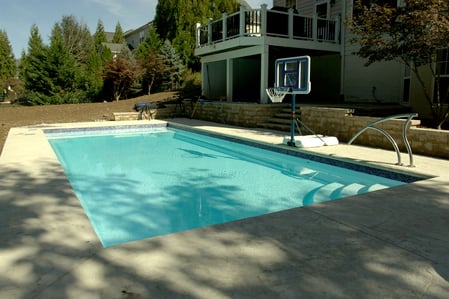
One thing to avoid is trying to get the best of both worlds. In most cases, a pool that attempts to be both ends up being too shallow to dive, yet too deep to play.
3. Do you want to use your pool for laps or exercise?
If lap swimming or exercise is important to you, not every pool design will be the right fit.
First, length matters. Most people will want a pool that’s at least 30 feet long to comfortably swim laps.
You’ll also want a clear swim lane. Steps, benches, or sharp angles can get in the way and make it harder to move freely or push off the wall.
And for things like water aerobics, having enough open space and a comfortable standing depth is necessary.
If exercise is part of your plan, these details are worth thinking through before choosing a design.
4. Are you planning to use an automatic pool cover?
All rectangular fiberglass pools do accommodate automatic pool covers but there are minor factors that make some designs a little more compatible than others.
Automatic covers operate best on clean, straight lines. Pools with tighter corners (closer to a true 90-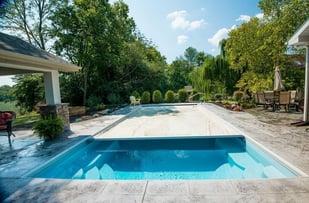 degree angle) and straighter walls tend to allow the cover to run more smoothly.
Pools with more rounded corners or slight variations in the walls can still work, but they may require a bit more adjustment during installation.
None of this is a deal breaker, but if an automatic cover is important to you, it’s worth keeping these small design details in mind as you compare options.

5. How do you want to use your pool’s built-in features?
All fiberglass pools come with built-in steps and seating, and many also include features like tanning ledges. How these are designed can make a big difference in how the pool feels once it’s in your backyard.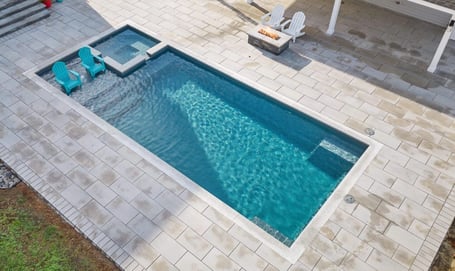
Some designs include larger steps, benches, and tanning ledges that can make the pool feel more comfortable and easier to use, but they also take up more space and shape how the overall layout comes together.
It’s worth thinking about how these features line up with how you plan to use the pool, whether that’s swimming, exercising, relaxing, or a mix of all three.
With multiple sizes and features to choose from, pricing can vary. Want a clearer idea of what your pool might cost? Try our Design and Price tool below.

So, what is the best rectangular fiberglass pool design?
At the end of the day, there isn’t a single “best” rectangular fiberglass pool design, there’s just the one that fits your lifestyle.
As you’ve seen, the details matter. Things like swim space, depth, layout for exercise, compatibility with features like automatic covers, and how steps, benches, and tanning ledges are designed all play a role in how the pool will feel once it’s installed.
The key is to look beyond how a pool appears and think about how it will function once you’re actually using it.
When you take the time to consider these factors, it becomes much easier to narrow down your options and choose a pool that fits your space, your needs, and your day-to-day life.
Frequently Asked Questions
What should I look for when choosing a rectangular fiberglass pool?
When choosing a rectangular fiberglass pool, focus on how you’ll use it. Key factors include open swim space, pool depth, room for exercise, compatibility with automatic covers, and how steps and benches are laid out.
How deep should my fiberglass pool be?
It depends on how you plan to use it. If you want a pool for games and general use, a shallower “play pool” is usually best. If you want a diving board, you’ll need a much deeper pool designed specifically for diving.
How long does a pool need to be for lap swimming?
For lap swimming, most people need a pool that’s at least 30 feet long. It should also have a clear, straight swim lane without steps or obstacles so you can move and push off the walls easily.
Are rectangular fiberglass pools better for automatic covers?
Yes, rectangular fiberglass pools generally work well with automatic covers. Their straight edges and corners make it easier for the cover to operate smoothly, especially when the walls are straight and corners aren’t overly rounded.
Why do some pools feel smaller even if they’re the same size?
Some pools have large steps, benches, or built-in features that take up space inside the pool. This reduces the amount of open swim area, which can make the pool feel smaller and limit how it’s used.
From the Author
Choosing the right rectangular fiberglass pool might seem straightforward at first, but once you start looking at different designs, the details can make a big difference in how your pool actually gets used.
I’m Jason Hughes, a partner at River Pools Virginia and a fiberglass pool installer with more than 20 years of hands-on experience. Over the years, I’ve worked with a lot of homeowners trying to figure out which pool design will best fit their family, their backyard, and how they plan to use the space.
I wrote this article to help you think through some of the key details that often get overlooked after you’ve decided on a rectangular pool, like size, layout, and features, so you can choose a model that truly fits your space and lifestyle.
From the Manufacturer
At River Pools, we often work with homeowners who know they want a rectangular fiberglass pool but need help choosing the right size and layout for their backyard.
Details like depth, swim space, and features can make a big difference in how the pool is used day to day. This article is designed to help you think through those choices with confidence.
When you’re ready to take the next step, connect with a trusted, independently owned and operated installer in your area to explore your options.
Ready to start the conversation?

