

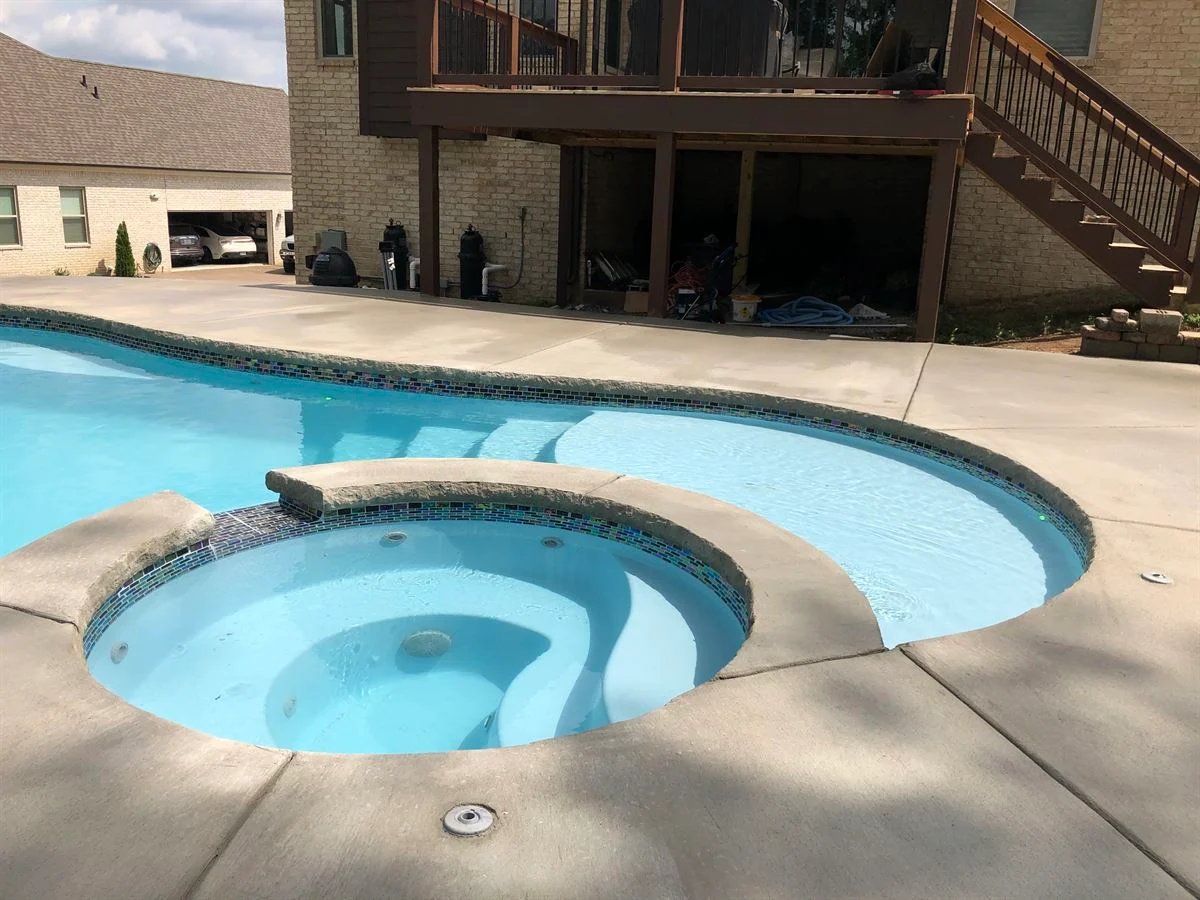
When homeowners start designing a fiberglass pool, the options can add up quickly, tanning ledges, bench seating, water features, and one feature that often enters the conversation: a built-in spa.
A built-in spa is one of the more popular upgrades because it adds a place to relax, hangout and socialize. But it also changes the layout of the pool and the overall project.
Here’s what to know before deciding if it’s the right fit.
What Are the Benefits of a Fiberglass Pool with a Spa?
1. Easier to Maintain
Most people assume adding a spa means doubling the work, but it's often easier than expected.
A built-in fiberglass spa shares your pool’s filtration system, so there’s no separate water balancing routine like you’d have with a standalone hot tub.
Because the spa is connected, sanitation can happen at the same time as the pool, which can make overall maintenance feel more streamlined than managing two independent systems.
2. You May Use it More Often
Standalone hot tubs can sometimes feel like a separate destination in the backyard. And if we’re being honest, many of them stay covered for long stretches of time.
Part of that comes down to setup and upkeep. When a spa operates independently, it requires its own attention.
A built-in spa, however, runs alongside the pool system. The water is already circulating and sanitized, so instead of preparing it separately, you can just hop in.
For many homeowners, that simplicity makes regular use more likely.
3. Saves Patio Space
A separate spa requires its own footprint, clearance space, and equipment setup.
A built-in spa uses the pool’s existing design instead of expanding beyond it. That can free up room for patio space, outdoor kitchens, seating areas, or landscaping.
4. Enhances Your Backyard Aesthetics
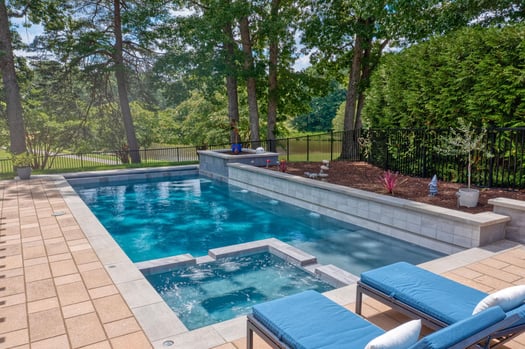
When the spa is built into the pool shell, the design tends to feel more connected.
Matching finishes, spillover features, and coordinated lighting create a seamless look. For many homeowners, that integration helps the backyard feel thoughtfully designed and well put together.
5. Same Durable Gelcoat
A built-in fiberglass spa features the same gelcoat surface as the pool, which many homeowners see as one of fiberglass’s key advantages.
Gelcoat is smooth, algae-resistant, and durable. With proper maintenance, it typically won’t require resurfacing like concrete or acrylic spas can over time.
6. Use of One Pool Cover
Because the spa is integrated, one safety or automatic cover can typically protect both areas. That can simplify operation and reduce the need for storing multiple covers.
With multiple sizes and features to choose from, pricing can vary. Want a clearer idea of what your pool might cost? Try our Design and Price tool below.

What Are the Downsides of a Fiberglass Pool with a Spa?
1. Limits Your Swimming Area
One drawback of a fiberglass spa is that it will cut into your swim space, typically on the pool's shallow end.
Fiberglass pools generally max out around 40 feet long and 16 feet wide. A built-in spa would take away an approximately 10x10 foot area. If swim space is your top priority, this is worth thinking about.
2. Design Flexibility Is Limited
Fiberglass pools are pre-engineered, which means the spa’s shape and placement are built into the design. You won’t be able to relocate or reshape it within that specific model. There are many pool designs available, but customization does have its limits.
3. Pool and Spa Colors Must Match
As mentioned above, since the pool and spa are manufactured as one shell, they share the same gelcoat finish. You won’t be able to choose a different color for the spa or create a contrasting design.
For many homeowners, matching finishes aren’t a concern. But if you’re envisioning a two-tone look or a spa that stands out visually from the pool, a separate spa would give you more flexibility.
4. A Heated Spa Setup Requires Additional Equipment
The built-in spas we offer share the same pump and heater as the pool they’re connected to. In that setup, the spa acts more like a pool add-on with jets and usually doesn’t add much to your monthly operating costs.
However, if you’re hoping for a warmer, true spa experience, you may need to splurge on a separate pump and heater system. That added equipment can increase energy use, chemical demand, and overall maintenance costs.

Should You Consider a Separate Fiberglass Spa Instead?
If you don’t want the spa built into the pool, you can install a separate fiberglass spa alongside it.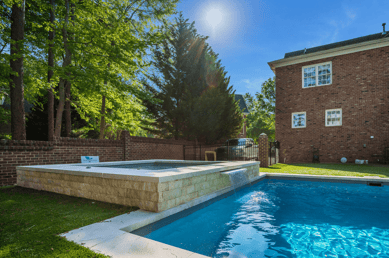
Our R40 Model + SS08 with Spillway
This option allows more flexibility in placement and elevation. You can raise it for a dramatic spillover effect, place it farther from the pool, or choose a different size or shape. It also allows you to select a different color than the pool.
However, it typically costs more because it requires additional plumbing, equipment, and installation work.
Fiberglass Spa vs. Traditional Hot Tub
If you’re deciding between a fiberglass spa and a traditional hot tub, the difference usually comes down to purpose and budget.
Traditional hot tubs are typically built for hydrotherapy. They usually offer ergonomic seating and more jets focused on massage. Most fall in the $8,000–$15,000 range, depending on brand and features.
Fiberglass spas tend to have bench seating (not ergonomic) and fewer jets, but they’re designed to match your pool and can include spillover water features. A built-in fiberglass spa typically adds $10,000–$20,000 to a pool project, while a separate fiberglass spa often ranges from $18,000–$35,000 installed.
Pricing varies by region and project scope, but these ranges can help you compare options realistically.

So, Should You Get a Fiberglass Pool with a Built-In Spa?
A built-in spa adds convenience, relaxation and visual impact. It also can take up swimming space and limit certain design choices.
None of those factors are deal breakers on their own. They’re just part of the full picture.
When homeowners weigh this decision carefully, considering swim space, budget, and how often they’ll realistically use the spa, the right direction tends to reveal itself.
Frequently Asked Questions
How much does it cost to add a built-in spa to a fiberglass pool?
A built-in spa typically adds $10,000–$20,000 to a fiberglass pool project, depending on the model and features. A separate fiberglass spa usually ranges from $18,000–$35,000 installed. For comparison, a standalone traditional hot tub often falls between $8,000–$15,000. Final pricing depends on region, site access, and overall project scope.
Does a built-in spa reduce the size of the pool?
Yes. A built-in spa takes up part of the pool’s footprint, typically in the shallow end. Whether that feels significant depends on the overall pool size and how you plan to use it.
Are fiberglass pool spas easier to maintain than hot tubs?
In many cases, yes. A built-in fiberglass spa shares the pool’s filtration system, so there’s no separate balancing routine. That said, if you are looking for a warmer, true spa experience, you will need to purchase a separate pump and heater system, which means you should expect some increase in chemical use and heating costs.
Can you choose a different color for the spa than the pool?
Not with a built-in fiberglass spa. Because it’s part of the same fiberglass shell, the pool and spa share the same finish. If you want contrasting colors, you would need a separate spa.
Can I add a spa later if I don’t build it now?
You can typically add a separate spa later, but doing so may increase cost and complexity compared to including it in the original design. Planning ahead often provides more flexibility and efficiency.
From the Author
Designing a pool involves a lot of decisions, and adding a spa is one of them. A built-in spa can add comfort and versatility to a backyard, but it also changes how the pool is designed and used.
I’m Jason Hughes, a partner at River Pools Virginia and a fiberglass pool installer with more than 20 years of hands-on experience. In this guide, I’ve drawn on both my installation experience and the questions I hear from homeowners every day to help you understand when a built-in spa makes sense, and when it might not.
The goal is simple: give you the information you need to evaluate this option clearly as you plan your backyard project.
From the Manufacturer
At River Pools, we’ve worked with homeowners across the country who are exploring different ways to make their backyard pool more comfortable and versatile. One option that often comes up during the design process is adding a built-in spa.
Through our collaboration with independent installers and homeowners, we’ve seen how this feature can influence everything from pool layout to how families use their backyard space day to day. Our goal with resources like this is to provide clear, practical information so you can evaluate your options with confidence.
If you’re ready to explore what a fiberglass pool with a built-in spa could look like in your backyard, the next step is connecting with a trusted independent installer in your area.
Ready to start the conversation?

Topics:
