

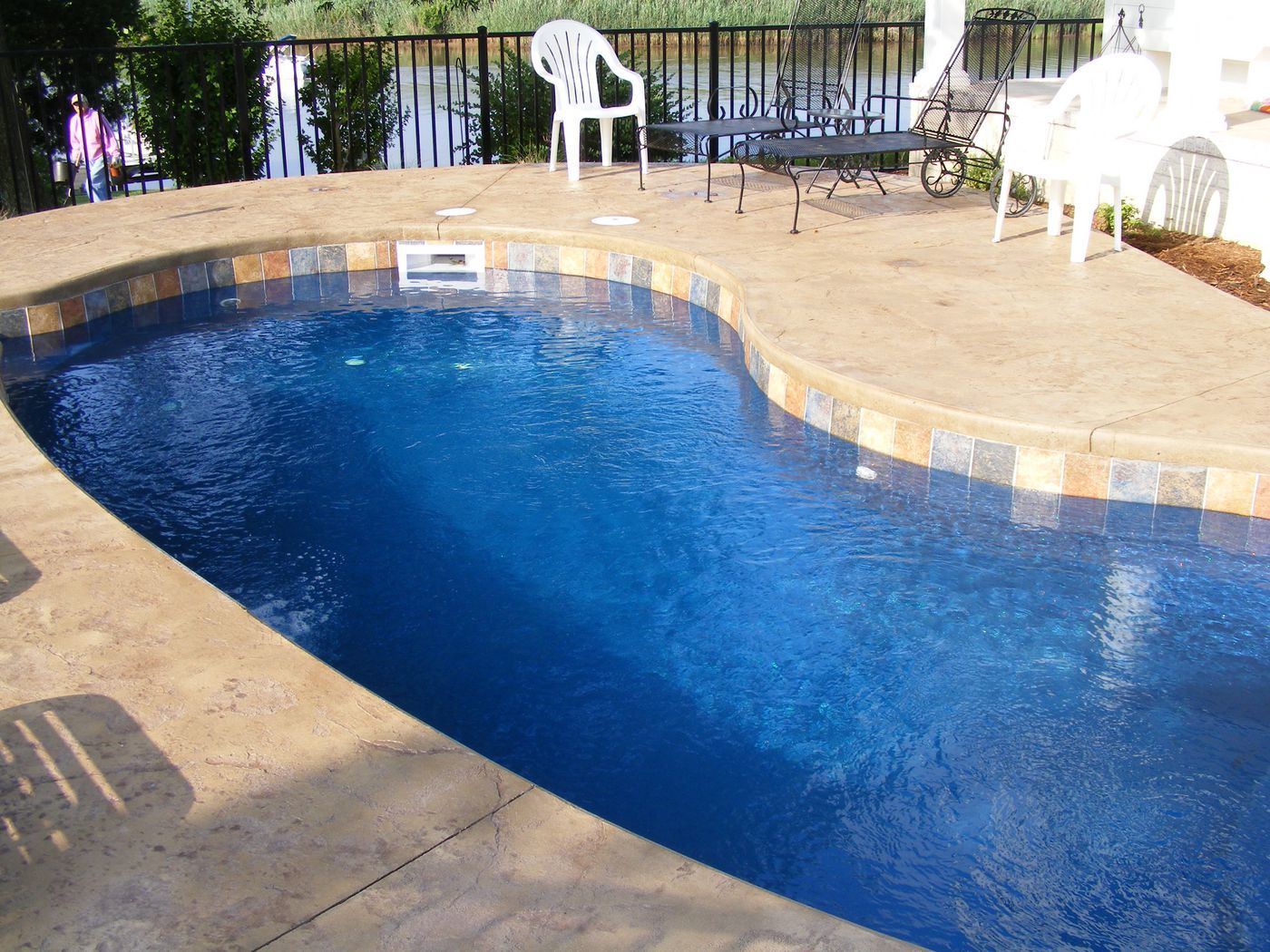
When planning a fiberglass pool, most homeowners focus on the pool itself, but one detail that can have a big impact on both look and feel is the pool coping.
In many cases, people assume cantilevered concrete is the only option. The truth is, you’ve got choices, and the one you pick can change not just the appearance of your pool, but how it feels to use day to day.
In this guide, we’ll compare two of the most common coping options for fiberglass pools:
- Cantilevered concrete coping
- Paver (brick-style) coping
We’ll break down the pros, cons, and costs of each so you can decide what makes the most sense for your backyard.
What Is Pool Coping and Why Does It Matter?
Coping is the material that caps the edge of your pool. It creates the transition between the pool shell and your surrounding deck.
It plays a bigger role than most people expect:
- It affects how your pool looks
- It impacts how the edge of the pool feels (smooth vs. rough)
- It can influence long-term durability and maintenance
Cantilevered Concrete Coping
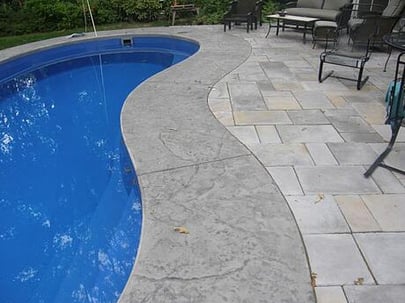
Cantilevered concrete coping is created by pouring concrete around the edge of the pool using forms. It’s one of the most common and cost-effective options for fiberglass pools.
Pros
- More affordable: Typically costs $12 to $25+ per linear foot.
- Clean, seamless look: Blends directly into the pool deck.
- Structurally solid: One continuous pour means fewer joints.
Cons
- Finish can vary: Because it’s poured on-site, the final look depends heavily on the installer.
- Can feel rough: Some homeowners find the texture less comfortable.
- Cracking can carry through: If the deck cracks, the crack may extend through the coping.

Paver Coping
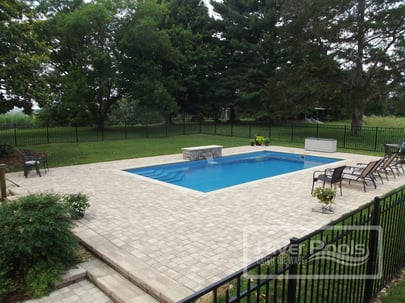
Paver coping uses individual bricks or stones placed around the pool’s edge. It’s often chosen for its appearance and design flexibility.
Pros
- More consistent finish: Factory-made materials create a more uniform look.
- Design flexibility: Wide range of colors, textures, and styles.
- Easier repairs: Individual pieces can be replaced if needed.
- Creates a defined border: Adds a visual “frame” around the pool.
Cons
- Higher cost: Typically ranges from $40 to $60+ per linear foot.
- More joints: Can mean slightly more maintenance over time.
Why Do Homeowners Choose One Over the Other?
In our experience, most fiberglass pool buyers choose between these two options based on two main factors:
-
Feel and Functionality: Some homeowners prefer a smoother surface around the pool edge, especially if they plan to spend a lot of time sitting or standing there.
-
Overall Look: Others want a more defined, high-end appearance. Paver coping creates a border effect that stands out compared to the seamless look of concrete.
Are There Other Fiberglass Pool Coping Options?
Yes, there are several other materials used for fiberglass pool coping, including:
- Natural stone (like travertine or bluestone)
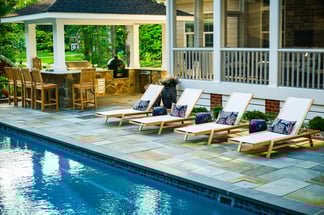
- Precast coping stones
These options tend to fall more in line with paver coping in terms of:
- Higher cost
- More design flexibility
- More defined visual appearance
With multiple sizes and features to choose from, pricing can vary. Want a clearer idea of what your pool might cost? Try our Design and Price tool below.

So, Which Pool Coping Option Is Right for You?
If you’re looking for a clean, simple, and cost-effective solution, cantilevered concrete coping is a solid choice.
If you prefer a more customized look, smoother feel, or a defined border around your pool, paver coping (or stone options) may be worth the investment.
Like most decisions when planning a backyard pool, it comes down to what matters most to you, budget, appearance, or how the space will feel when you’re using it.
Frequently Asked Questions
What is the best coping for a fiberglass pool?
It depends on your priorities. Cantilevered concrete is more affordable and offers a clean, seamless look, while paver coping provides more design flexibility and a smoother, more consistent finish.
How much does pool coping cost?
Cantilevered concrete coping typically costs $12 to $25+ per linear foot, while paver coping usually ranges from $40 to $60+ per linear foot, depending on materials and design.
What is cantilevered concrete coping?
Cantilevered coping is concrete that’s poured in place around the pool edge, creating a continuous transition between the pool and the deck.
Does pool coping crack over time?
It can. With cantilevered concrete, cracks in the pool deck may extend into the coping. Paver coping, on the other hand, is made of individual pieces, so repairs are usually more localized.
Are there other coping options besides concrete and pavers?
Yes. Other common options include natural stone (like travertine or bluestone) and precast coping stones, which offer more design flexibility but typically come at a higher cost.

From the Author
Choosing materials around your pool might seem like a small detail at first, but decisions like coping can have a big impact on how your backyard looks, feels, and holds up over time.
I’m Jason Hughes, a partner at River Pools Virginia and a fiberglass pool installer with more than 25 years of hands-on experience. Over the years, I’ve worked with a lot of homeowners trying to decide between options like cantilevered concrete and paver coping
I wrote this article to help you better understand those differences so you can choose a coping option that fits your pool, your space, and how you plan to enjoy your backyard.
From the Manufacturer
At River Pools, we’ve worked with homeowners across the country who are making decisions not just about the pool itself, but about all the details that surround it, like coping, decking, and overall backyard design.
What we’ve found is that choices like coping can have a bigger impact than many people expect. They influence how the pool looks, how it feels to use, and how the space holds up over time.
Our goal with resources like this is to give you a clear, practical understanding of those options so you can plan your project with confidence. If you’re considering a fiberglass pool and want to explore what different coping options could look like in your backyard, the next step is connecting with a trusted independent installer in your area.
Ready to start the conversation?

