

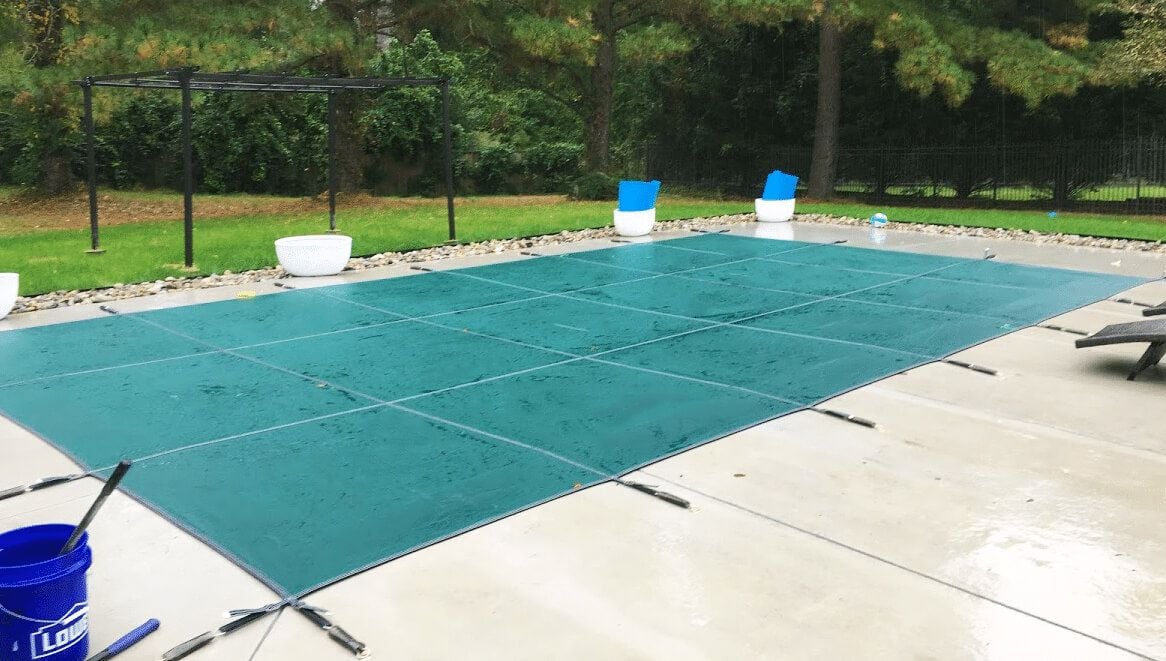
A pool cover might not be the most exciting part of owning a pool, but come spring, it can make a big difference. Less cleanup, fewer leaves, and a whole lot less hassle getting your pool back up and running.
The tricky part is figuring out which one to buy. Between different types, sizing, and price points, it’s easy to feel like you’re guessing your way through the process.
The good news? It doesn’t have to be complicated. Once you understand what to look for, choosing the right pool cover becomes pretty straightforward.
In this guide, we’ll walk through your options, how to size your cover correctly, where to buy one, and what you can expect to spend, so you can make a decision that fits your pool and your budget.
What are the different types of inground pool covers?
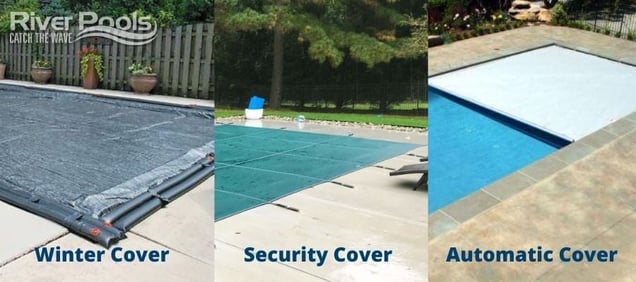
When it comes to pool covers, you’ve got a few solid options, but they’re not all created equal. Each type offers a different mix of cost, convenience, and protection.
Most pool owners end up choosing between three main types:
- Winter
- Security
- Automatic
There are other options out there, like solar covers or custom-built designs, such as rolling deck covers, but they’re not typically used for closing your pool during the offseason. Because of that, most folks stick with one of the three options above when it’s time to cover their pool for winter.

Where can you buy a pool cover?
Once you decide you need a pool cover, the next question is pretty straightforward, where do you actually get one?
The good news is, most pool covers are easy to find. You can pick up winter and safety covers from:
- Local pool supply stores
- Online retailers like Amazon
- Big box home improvement stores
If you’re going with an automatic pool cover, it’s a different story. These typically need to be purchased and installed through a dealer or pool professional since they’re built into your pool system.
For most homeowners, though, you can skip the sales process entirely and grab a standard cover online or in-store without much hassle.
How do you measure a pool for a cover?
If you’re wondering how big your pool cover needs to be, you can measure your inground pool to determine the right cover size before you go out and buy one, or you can use your pool’s dimensions if it’s a linear shape. Not sure if you have the right dimensions? Here’s how to measure for a pool cover:
Start with the overall shape of your pool:
- Measure the length and width at the longest and widest points using measuring tape.
- Include steps, curves, and any extensions beyond the main pool area.
- Measure in feet.
For example, our L36 pool is linear in shape, but it has two curved sections on each end. Both of those need to be included while measuring your pool to get the right size pool cover.
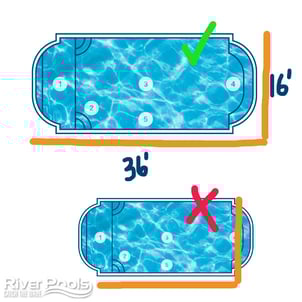
Rectangular pools and simple geometric or freeform shapes are the easiest to measure, but if your pool is irregularly shaped, you might need to order a custom pool cover.

How to Measure Your Pool for a Custom Pool Cover
Your pool cover manufacturer should provide exact instructions for measuring your inground pool for a custom cover, which will likely call for a more complex measuring method known as A-B measuring.
Here's a breakdown of what that might entail using out I30s model as an example: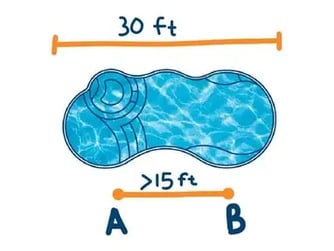
Step 1: Set Reference Points
-
Pick two points (Point A and Point B) about 5 feet away from the pool edge.
-
Make sure they are at least half the pool's length apart.
In our example, the I30s is 30 feet long, so the distance between point A and point B needs to be at least 15 feet.
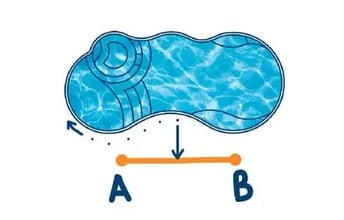
Step 2: Mark the Pool Edge
- Mark points every 2-3 feet around the edge of the pool.
- Label them (1, 2, 3, etc.)
Step 3: Measure from Point A 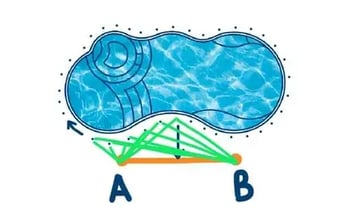
- Measure from Point A to every marked point.
- Label each one (A1, A2, A3...)
Step 4: Measure from Point B
- Do the same from Point B to every marked point.
- Label each one (B1, B2, B3..)
Note: You’ll need all of your measurements when ordering a custom pool cover, so be sure to write them down. You may also need to take pictures of your pool as a reference or draw a diagram of your pool with the different points, depending on your pool cover manufacturer's instructions.
Pool Measuring Tips
- Most pool covers come slightly larger than the pool size, so you won’t typically need to factor in extra space when placing your order.
- If you’re stuck between two sizes, order a size up rather than a size down.
- When in doubt, measure again.
- For custom pool covers, carefully follow any directions that your pool cover manufacturer provides.
If you’d rather not deal with measuring, you can always have a local pool professional handle it. This is especially helpful for safety covers or custom fits.
How much does an inground pool cover cost?
Pool cover prices can vary quite a bit depending on the type you choose and the size of your pool.
- Winter pool cover: $75 - $250
- Security pool cover: $1,500 - $4,500
- Automatic pool cover: $15,000 - $30,000
Winter covers are the most budget-friendly option and provide basic protection. Security covers cost more but offer added durability and safety. Automatic covers are the most expensive, but they provide the highest level of convenience and ease of use.
Read more: How Much Do Inground Pool Covers Cost?
When should you put a cover on your pool?
The nice thing about pool covers is that you’re not locked into a specific timeline, you can add one at pretty much any point after your pool is installed, depending on the type you choose.
That said, most homeowners install their cover when they’re closing the pool for the season. It’s a natural time to do it, and it helps keep leaves, debris, and buildup out of the water while the pool sits through the offseason.
If you’re getting ready to close things down, adding a cover at that point is a simple step that can make opening your pool in the spring a whole lot easier.
With multiple sizes and features to choose from, pricing can vary. Want a clearer idea of what your pool might cost? Try our Design and Price tool below.

Frequently Asked Questions
What type of pool cover is best for winter?
The best pool cover for winter depends on your needs and budget. Winter covers are the most affordable, security (safety) covers offer added protection and durability, and automatic covers provide the most convenience but come at a higher cost.
Where can I buy a pool cover?
You can buy pool covers from local pool supply stores or online retailers like Amazon. However, automatic pool covers typically require working with a dealer or professional installer.
How do I measure my pool for a cover?
To measure your pool, use a tape measure to find the length and width, including any steps or extensions. For irregular shapes, you may need to use a more detailed method (like A-B measuring) or order a custom cover.
When should I put a cover on my pool?
You can install a pool cover at any time after installation, but most homeowners add it when closing their pool for the season to keep it clean and protected through winter.
How much does an inground pool cover cost?
Pool cover prices vary widely based on type:
-
Winter covers: $75–$250
-
Security covers: $1,500–$4,500
-
Automatic covers: $15,000–$30,000
From the Author
Choosing a pool cover might not seem like a big decision at first, but it can have a real impact on how easy your pool is to manage from one season to the next.
I’m Jason Hughes, a partner at River Pools Virginia and a fiberglass pool installer with more than 25 years of hands-on experience. Over the years, I’ve worked with many homeowners who aren’t sure which type of cover to choose, how to size it correctly, or what they should expect to spend.
I wrote this article to help simplify that process. My goal is to give you a clear understanding of your options so you can choose a pool cover that fits your pool, your budget, and how you plan to use your backyard, without second-guessing your decision later on.
From the Manufacturer
At River Pools, we regularly talk with homeowners who are getting ready to close their pool and realize they need to choose a cover, but aren’t quite sure where to start. Between different types, sizing requirements, and price points, it’s easy to feel unsure about what’s actually the right fit.
Through our experience manufacturing fiberglass pools and working with independently owned and operated installers, we’ve seen many of the same questions come up around choosing, sizing, and buying pool covers.
If you’re considering a fiberglass pool or planning ahead for long-term maintenance, the next step is connecting with a trusted independent installer in your area. They can help you evaluate your options and make sure your pool, and everything that goes with it, fits your space and your goals.
Ready to start the conversation?

Topics:
