

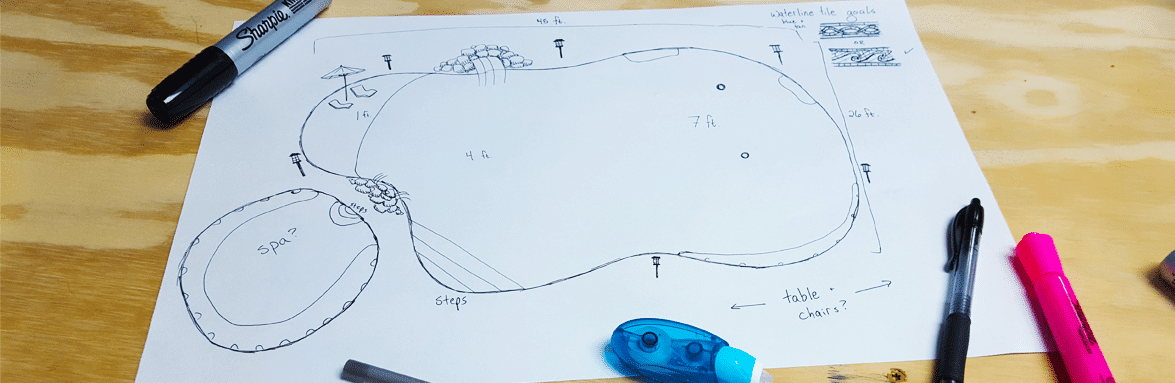
Designing a concrete pool gives you a lot of flexibility, but that doesn’t mean every design makes sense.
The best concrete pool design comes down to how you’ll actually use it.
Whether it’s relaxing, spending time with family, hosting friends, or getting in a workout, your primary goal should guide everything, from shape and size to depth and features.
In this guide, we’ll walk through the design options available and help you choose what actually fits your life.
And while we specialize in fiberglass pools at River Pools, our goal is simple: give you the clarity you need to choose the right pool for your home.
What are the main reasons people get a pool?
Before you think about shape, size, or features, there’s a more important question to answer:
How do you actually plan to use your pool?
Most pools end up serving one of three main purposes:
- Socializing
- Family play
- Exercise
While a pool can be used for all three, most homeowners naturally use it for one primary purpose (and maybe a second).
Now is not the time to lie to yourself about how often you exercise or how many friends you have.
Because how you plan to use your pool should drive every design decision that comes next.
For example:
- A pool for entertaining will look very different than one built for swimming laps.
- A family-focused pool may prioritize shallow areas and open space.
- A relaxation-focused pool might lean into seating, ledges, and comfort.
Once you’re clear on your main goal, choosing the right shape, depth, and features becomes a whole lot easier.
What shapes can concrete pools be?
When it comes to shape, most concrete pools fall into two main categories: linear (rectangular) and freeform.
Linear pools feature clean, straight lines and can feel either traditional or modern depending on the design. They’re a great fit for swimming, lounging, and more structured backyard layouts.
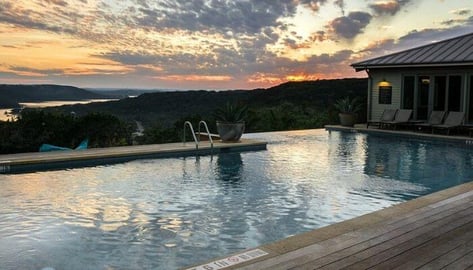
Freeform pools feel more tropical and informal. They can be ambiguously cloud-like or mimic a specific object, such as a fish or piano. Or a fish on a piano, if you’re into that. Just remember that you (and your friends and family) have to look at your pool design for years to come. Choose wisely.
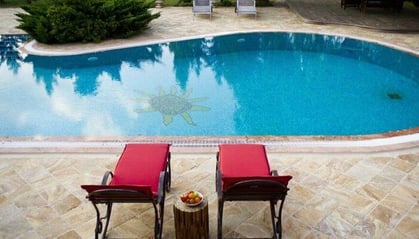
How deep should a concrete pool be?
Once you’ve thought about shape, the next decision is depth, and this should always come back to how you plan to use your pool.
Here’s a general guideline:
- Kiddie play area: 3 feet or less
- Recreational sports: 3.5–4 feet
- Lounging/cooling off: 3.5–4 feet
- Swimming: 3.5 feet or deeper
- Jumping in (feet first): 5 feet or deeper*
- Diving (head first): 9 feet or deeper*
*Check with your builder for the latest safety industry standards.
Since you pay more for every square foot of surface, you might not want to invest in a deep end if you won’t use it.
Can fiberglass pools match concrete pool shapes and depths?
Now, we should probably address something: We’re a fiberglass pool manufacturer… writing an article about concrete pool designs.
So it’s only fair to ask, how does fiberglass actually compare?
The biggest difference comes down to customization vs. pre-designed models.
Concrete pools can be built into almost any shape or depth. Fiberglass pools are manufactured ahead of time, so their shapes and sizes are set. With that being said, at River Pools, we design our models around how most homeowners actually use their pools.
For example, our R Series, deep-end T40 model, and D Series pools all use a rectangular frame.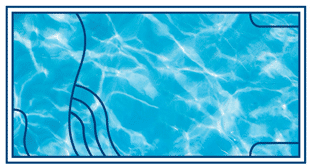
If you want a cool twist on the linear look, our Roman-end L36 pool model offers just that.
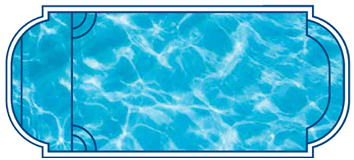
We also offer freeform options like our I Series and C Series, which create a casual lagoon-style feel.


While fiberglass doesn’t offer unlimited customization, it tends to cover the majority of real-world needs.
There are a few limitations to keep in mind:
- Typically up to 16 feet wide
- Around 40 feet long
- Up to about 8.5 feet deep
That’s simply because the pool has to be transported to your home by vehicle and must meet highway regulations.
If you’re looking for a highly specific shape or a very deep pool (like for diving), concrete may be a better fit.
What features can you add to a concrete pool?
Beyond shape and depth, features play a big role in how your pool actually feels and functions day to day.
Concrete pools give you the flexibility to incorporate a variety of built-in features, including:
- Tanning ledges
- Interior steps
- Bench seats
- Swim jets
A tanning ledge is a shallow shelf (typically 6–12 inches of water) where you can relax in a chair, let kids splash around, or even give the dog a place to cool off. Just keep in mind, depending on your interior finish, the tanning ledge on a concrete pool may be rough on your skin.
Interior steps provide easy entry and exit, and with concrete, they can be fully integrated into the design without much limitation. 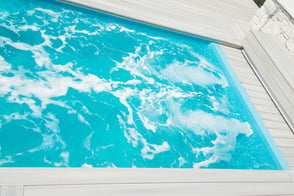
Bench seating creates a comfortable place to sit and gather, especially useful for socializing without needing to stay fully submerged.
And if you’re looking for a more active use, swim jets can add resistance for exercise or provide a gentle hydrotherapy experience when paired with seating.
Do fiberglass pools include the same features as concrete pools?
Yes, fiberglass pools can include many of the same features, but they’re built into the design rather than added on later.
That means features like tanning ledges, interior steps, and bench seating are already part of the pool’s structure.
One key difference is the surface. Fiberglass pools have a smooth gelcoat finish, so areas like tanning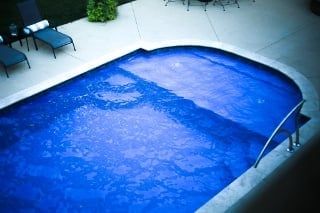 ledges and benches tend to feel more comfortable compared to rougher concrete surfaces.
At River Pools, several of our models are designed with these features in mind:
-
Our D Series, L36 model, and C Series include a tanning ledge.
-
All of our fiberglass pool models include both textured interior pool steps and bench seats.
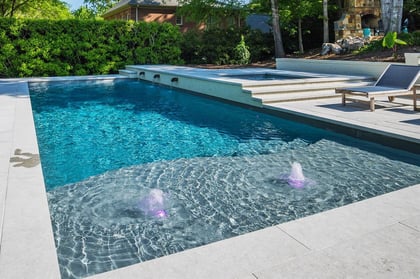
We’ve also had many customers who added bubblers on tanning ledges and therapeutic jets along the bench seats. It’s super doable!
What concrete pool design is best for me?
By now, you’ve seen how shape, depth, and features all come into play.
The next step is putting it all together.
The best pool design depends on how you plan to use it most often. While every pool can serve multiple purposes, most homeowners tend to prioritize one of the following:
Pools for socializing
If your goal is to bring people together, your design should focus on comfort and conversation.
Features like bench seating and tanning ledge give people a place to relax and hang out without needing to constantly swim.
These pools are typically more shallow (around 3.5-4 feet) since lounging, not active swimming, is the priority.
Both rectangular and freeform designs can work well here, as long as seating areas are positioned so people can easily interact.
Pools for family play
If your pool is all about family use, you’ll want open space and flexibility.
A wide, unobstructed center makes it easier to play games, while features like tanning ledges or shallow areas give younger kids a safe place to enjoy the water.
Bench seating can also come in handy for quick breaks between activities.
Depths around 3.5-4 feet work well for most families, with the option to include a shallow area or deeper section depending on your needs.
Pools for exercising
If your primary goal is exercise, the design becomes much more straightforward.
You’ll want a long layout, typically at least 35 feet in length, to allow for lap swimming.
Depth should be at least 3.5 feet or deeper, depending on preference.
Rectangular pools are usually the best fit for this purpose, as they provide a clean, efficient swimming path.
If space is limited, options like a tether system or swim jets can help create resistance for exercise in a smaller pool.

What are the alternatives to concrete pools?
Concrete pools are the most customizable of the three pool types, but they’re not the only option, and they're typically the most expensive.
Two other common types of inground pools are vinyl liner and fiberglass.
Vinyl liner pools, much like concrete, allow for some customization, but often at an added cost. It can also be challenging to cut the liner into creative shapes, and the liner has to be replaced about every 5-9 years.
Fiberglass pools come with features like bench seating and tanning ledges as part of the original design. They're also known for lower long-term maintenance, which means they often cost the same or less than vinyl liner or concrete pools over time.
Each pool type has its own advantages, and the right choice depends on your goals, budget, and how you plan to use the pool.
Before making a decision on a purchase like this, it’s worth taking the time to compare all three options so you can feel confident you’re choosing what fits your needs best.
If you’re ready to take the next step, you can start by downloading our free ebook below.

Choosing the best concrete pool for your needs
Overall, there’s no one “perfect” pool design, only the one that works best for you.
If you focus on how you’ll use your pool day to day, everything else such as shape, depth, and features, falls into place.
Take the time to get that part right, and you’ll end up with a pool you actually use and enjoy, not just one that looks good on paper.
With multiple sizes and features to choose from, pricing can vary. Want a clearer idea of what your pool might cost? Try our Design and Price tool below.

Frequently Asked Questions
What is the best shape for a concrete pool?
The best shape depends on how you plan to use your pool. Rectangular (linear) pools are ideal for swimming and exercise, while freeform pools create a more relaxed, social atmosphere. Most homeowners choose a shape based on whether they prioritize function or aesthetics.
How deep should a concrete pool be?
The depth of your pool will depend on how you plan on using it.
-
3–4 feet: lounging, socializing, and family play
-
4+ feet: swimming and general use
-
9+ feet: diving
If you won’t regularly use a deep end, it may not be worth the added cost.
What features can you add to a concrete pool?
Concrete pools can include features like tanning ledges, built-in steps, bench seating, and swim jets. These features can enhance relaxation, improve usability, and support activities like socializing or exercise.
Can fiberglass pools have the same features as concrete pools?
Yes, fiberglass pools come with many of the same features, including tanning ledges, steps, and bench seating. The key difference is that these features are built into the mold rather than custom-designed. Fiberglass also offers a smooth surface that’s gentler on skin.
From the Author
There’s no shortage of ideas when it comes to designing a concrete pool, but figuring out what actually makes sense for your space and how you’ll use it is where most people get stuck.
I’m Cristian Shirilla, Marketing Manager at River Pools and co-owner of a fiberglass pool installation company in Virginia. Over the years, I’ve worked closely with homeowners sorting through these kinds of decisions, especially when it comes to how design choices play out in real life.
I wrote this article to help you think through those decisions more clearly, so you can land on a pool design that fits how you’ll actually use it day to day.
From the Manufacturer
At River Pools, we regularly work with homeowners who are trying to make sense of all the design choices that come with planning a pool, especially when it comes to shape, depth, and features.
One thing we’ve seen time and time again is that the best outcomes happen when the design is based on how the pool will actually be used, not just how it looks on paper. That’s true whether someone ultimately chooses a concrete, vinyl liner, or fiberglass pool.
Resources like this are meant to help you think through those decisions more clearly so you can move forward with confidence.
If you’re considering a fiberglass pool and want to explore what your options might look like in your own space, the next step is connecting with a trusted independent installer in your area. They can help evaluate your yard, walk through design options, and help you plan a project that fits your goals.
Ready to start the conversation?

