


Most homeowners want to get as much use out of their swimming pool as possible, but cooler temperatures can shorten the swim season in many parts of the country.
That’s why pool heaters are one of the most common upgrades homeowners ask about when planning an inground pool. The challenge is understanding which type of heater makes the most sense for your climate, budget, and goals.
In this guide, we’ll compare the three main types of pool heaters — solar, electric heat pumps, and gas heaters — including how they work, what they cost to operate, and the pros and cons of each option so you can decide which swimming pool heater may be the best fit for your backyard.
Why heat your pool?
For many homeowners, a pool heater is less about making the water “hot” and more about making the pool comfortable enough to use longer throughout the year.
In many parts of the United States, an unheated swimming pool may only feel comfortable for three or four months out of the year. A pool heater can often extend the swim season by several additional weeks or even months depending on your climate and the type of heater you choose.
This means another month of swimming in the spring before everything's in full bloom, and another month in the fall after the leaves start to turn yellow and fall from your local trees (hopefully not into your pool, but that's one good reason to consider using a swimming pool cover as well).
What are the main types of pool heaters?
There are three primary types of swimming pool heaters homeowners typically consider:
- Solar
- Heat pump (electric)
- Gas or propane
Each option works differently and comes with its own advantages, limitations, operating costs, and ideal use cases.

How do swimming pool heaters work?
Solar pool heaters
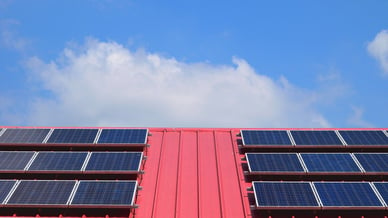
Solar pool heaters use the sun’s energy to warm your pool water. Your existing pool pump circulates water through solar collectors, typically mounted on a roof or rack system, before returning to the pool at a warmer temperature.
Because they rely on sunlight, solar pool heaters tend to work best in consistently warm and sunny climates.
Pros of solar pool heaters
- Lower long-term operating costs
- Uses renewable energy
- Can extend swim season in many climates
- Environmentally friendly
Cons of solar pool heaters
- Requires significant roof or yard space
- Performance depends heavily on sunlight
- Slower heating than gas heaters
- Higher upfront installation costs in some cases
Electric pool heaters
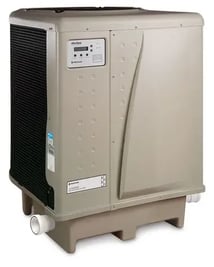
Electric heat pumps actually use a form of solar energy, too. They pull warmth from the surrounding air and transfer that heat into your pool water. While they use electricity, they operate much more efficiently than traditional electric resistance heaters because they move heat rather than generate it directly.
Most heat pumps work best when outdoor temperatures remain above roughly 55°F (12°C).
Pros of electric pool heaters
- Lower operating costs than gas heaters
- Energy efficient
- Popular option for extending swim season
- Consistent temperature maintenance
- Lower long-term cost for many homeowners
Cons of electric pool heaters
- Slower heating than gas heaters
- Less effective in colder temperatures
- Higher upfront equipment costs than some gas heaters
Gas or propane pool heaters
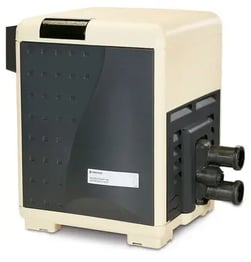
Gas-powered pool heaters will either burn propane or natural gas to heat your pool water. Water passes through heated coils inside the unit before returning to the pool at a warmer temperature.
Unlike heat pumps or solar systems, gas heaters don’t rely on outdoor air temperature or sunlight to operate effectively.
Pros of gas pool heaters
- Fastest heating option
- Works in any outdoor temperature
- Great for quickly heating pools or spas
- Ideal for occasional heating needs
Cons of gas pool heaters
- Highest operating costs
- Fuel costs can fluctuate significantly
- Less energy efficient than heat pumps
- Shorter lifespan in some environments

How much do pool heaters cost?
Operating costs are one of the biggest factors homeowners consider when choosing a swimming pool heater.
While exact costs vary based on climate, pool size, energy prices, and usage habits, here are general operating cost ranges homeowners often see today:
- Solar pool heaters: Lowest operating costs, but may increase pump electricity usage slightly
- Electric heat pumps: Roughly $100–$400 per month during active heating seasons
- Gas pool heaters: Often $300–$800+ per month depending on fuel prices and usage
Electric heat pumps are typically considered the most cost-efficient option for homeowners who plan to heat their pool regularly throughout the swim season.
Gas heaters tend to cost more to operate because they burn fuel directly, but they heat water much faster than other options.
Solar heaters generally have the lowest ongoing heating costs after installation, but performance depends heavily on sunlight and climate.
Solar vs. Electric Heat Pump vs. Gas Heater
| Heater Type | How It Works | Pros | Cons | Best For |
|---|---|---|---|---|
| Solar Pool Heater | Uses solar collectors to warm circulating pool water | Low operating costs, environmentally friendly | Requires large space, depends on sunlight | Warm, sunny climates |
| Electric Heat Pump | Pulls warmth from surrounding air to heat water | Energy efficient, lower monthly costs | Less effective below 55°F | Moderate climates and regular use |
| Gas/Propane Heater | Burns fuel to rapidly heat water | Fast heating, works in any temperature | Highest operating costs | Cold climates or occasional heating |
Which pool heater is the best?
The best swimming pool heater depends largely on where you live, how often you plan to heat your pool, and how much you’re comfortable spending upfront and over time.
For many homeowners, electric heat pumps offer the best balance of efficiency, operating cost, and swim season extension. Solar heaters can work well in consistently warm, sunny climates, while gas heaters are often the best option for homeowners who want fast heating performance regardless of outdoor temperatures.
Ultimately, the right pool heater is the one that aligns with your climate, pool usage, and long-term goals for your backyard. Talking with an experienced pool professional can help you evaluate which heating option makes the most sense for your specific project.
Frequently Asked Questions
What is the best type of swimming pool heater?
The best swimming pool heater depends on your climate, budget, and how you plan to use your pool. Electric heat pumps are often the most popular option because they offer a good balance of efficiency and operating cost. Gas heaters provide the fastest heating, while solar heaters can work well in sunny climates with lower long-term energy costs.
What is the cheapest pool heater to run?
Solar pool heaters typically have the lowest long-term operating costs because they use energy from the sun. However, electric heat pumps are often considered the most cost-effective overall option for homeowners who want reliable heating throughout the swim season.
What temperature do electric heat pumps work best in?
Electric heat pump pool heaters work best when outdoor temperatures stay above roughly 50–55°F. As temperatures drop below that range, their efficiency decreases significantly.
How much does it cost to heat a swimming pool each month?
Monthly pool heating costs vary depending on the type of heater, local utility prices, climate, and how often the pool is heated. Many homeowners spend roughly:
- $100–$400 per month with an electric heat pump
- $300–$800+ per month with a gas heater
- Minimal monthly heating costs with solar systems after installation

From the Author
Between solar heaters, electric heat pumps, gas heaters, operating costs, and climate considerations, many homeowners aren’t sure which pool heater actually makes the most sense for their backyard.
I’m Cristian Shirilla, Marketing Manager at River Pools and co-owner of a fiberglass pool installation company in Virginia. Through conversations with homeowners planning pools across a wide range of climates, I’ve seen how important it is to understand not just how pool heaters work, but how they fit into the way a family plans to use their pool.
I wrote this article to help simplify the different types of swimming pool heaters, explain the pros and cons of each option, and give homeowners a clearer understanding of what to expect in terms of performance and operating costs.
From the Manufacturer
At River Pools, we understand that planning a pool involves more than simply choosing a shape or size. Homeowners are also thinking about how often they’ll realistically use their pool, how comfortable the water will feel throughout the season, and what upgrades may help them get more enjoyment out of their backyard over time.
Because of that, pool heating options are a common part of the conversation during the planning process. Through our work with independent installers across the country, we’ve seen how different heating systems can impact swim season length, operating costs, and overall pool experience.
If you’re considering a fiberglass pool and want to explore heating solutions for your space and climate, the next step is connecting with a trusted independent installer in your area.
Ready to start the conversation?

Topics:
