

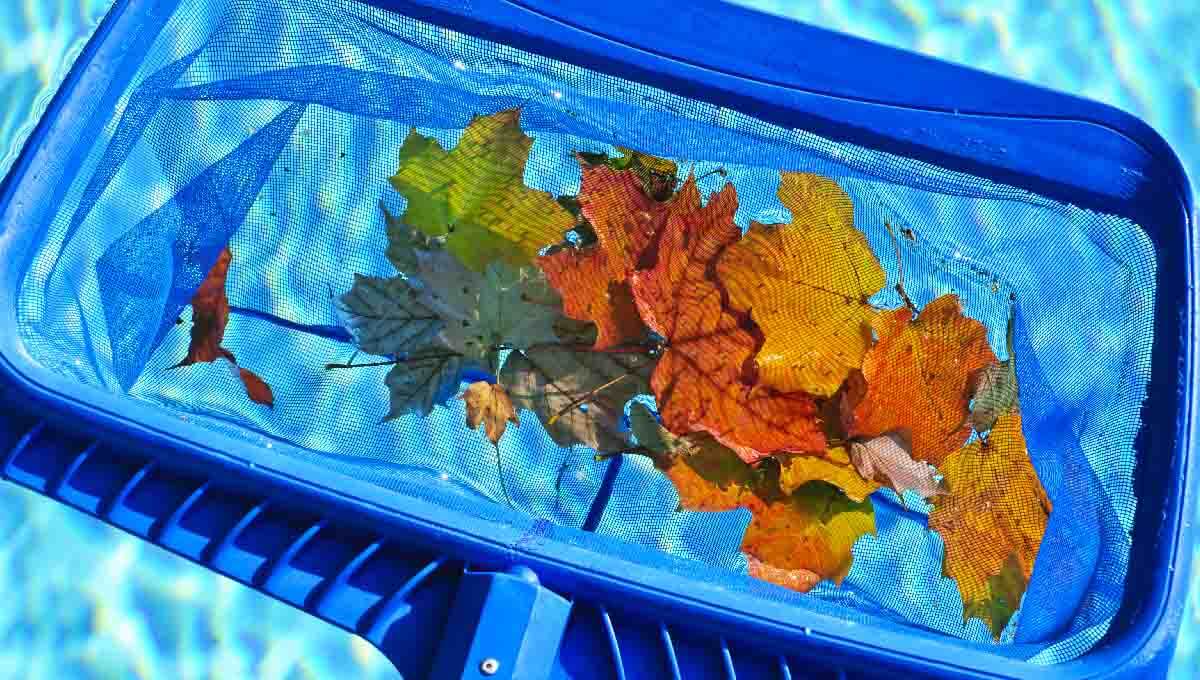
To maintain a new inground pool, you’ll need essential supplies like a skimmer net, pool vacuum, water test kit, and pool chemicals. These tools keep your water clean, balanced, and safe while helping prevent algae, stains, and long-term damage.
If you’re new to pool ownership, it’s easy to feel overwhelmed by all the options out there. The good news? You don’t need everything, just the right essentials and a simple routine.
In this guide, we’ll walk you through the pool supplies you’ll actually use, starting with the must-haves you’ll want on day one.
We’ll also break down what each item does, how often you’ll use it, and what you can expect to spend, plus a few optional upgrades that can make pool maintenance a whole lot easier once you get into a rhythm.
What pool supplies do I need for my pool?
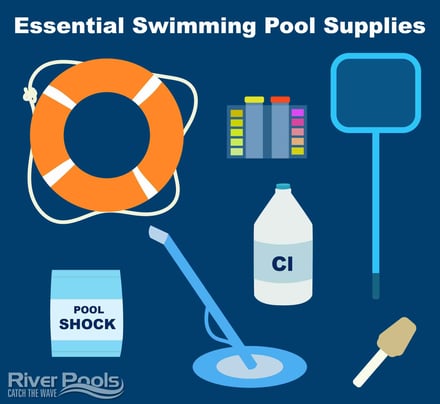
1. Skimmer Net
What’s the first tool that comes to mind when you think of pool supplies? Our guess is it’s a skimmer net, and for a good reason. It’s nice to have something around to fish unwanted bugs and leaves out of your pool, and a skimmer net makes that super easy to do.
Remember, things like leaves and berries can cause stains if they sit on the pool’s surface (the actual pool, not the water’s surface) for too long, so it’s better to fish them out while they’re floating along the top.
Pro tip: consider getting a leaf rake because it has a bigger net to help you quickly scoop up more leaves and debris.
Average skimmer net price: $20 to $40
2. Pool Vacuum
A pool vacuum or suction cleaner can go a long way in keeping your pool dirt and algae-free throughout its lifespan. Dirt can also cause stains if you let it sit on the pool floor or steps for too long, so it’s good to get in the habit of cleaning it up at least once per week.
This might sound like it’s going to be your least favorite chore, but we can assure you that it’s nothing like vacuuming the carpet in your home. In fact, a lot of customers tell us that they find vacuuming their pool to be a relaxing experience.
Average pool vacuum price: $120 to $450
3. Water Test Kit
The secret to keeping balanced pool water and a well-maintained pool is to regularly test the water (about two or three times per week should do the trick). Staying on top of your testing routine will help you keep your chemicals balanced, which not only makes your life easier but it’s also good for the surface of your swimming pool.
Because every pool is different, it's always a good idea to ask your pool's manufacturer or installer for guidance on proper chemistry levels.
A neglected pool can develop stains and other imperfections, and the longer you neglect it, the harder it will be to bring the water chemistry back to normal levels.
Average pool test kit price: $25 to $150
4. Pool Brush
Over time, pool walls can develop a slick layer of grime or algae if they’re not regularly cleaned. Brushing your pool about once a week helps keep surfaces looking clean and prevents buildup from becoming a bigger issue.
The type of brush you use matters. If you have a concrete pool, a steel-bristle brush is helpful for scrubbing algae out of the porous surface. For fiberglass or vinyl liner pools, stick with a soft nylon brush, anything abrasive can damage the surface. Fiberglass pools, in particular, don’t require aggressive brushing since their smooth gelcoat surface makes it harder for algae to latch on.
Average pool brush price: $20 to $40
5. Pool Pumice
For tough stains, especially along the waterline or on tile, a pool pumice stone can help remove buildup that other tools won’t.
To use it, keep both the surface and the stone wet and gently rub the stained area. Let the stone do the work, no heavy pressure needed. Just be sure to use it only on tile or concrete. It’s too abrasive for vinyl and fiberglass surfaces and can cause damage.
Pro tip: getting one with a handle might make your life a little bit easier.
Average pool pumice price: $15 to $30
6. Soft Cloths
For lighter stains or routine cleaning, a soft cloth and a gentle pool cleaner can often do the trick. This is especially useful for fiberglass pools, where non-abrasive cleaning methods help protect the surface. Just be sure to use a cleaner that’s designed for your specific pool type to avoid any damage.
Average soft cloth price: $10 to $25

7. Pool Sanitizer (chlorine, salt, etc.)
This is a no brainer, but if you’re going with traditional chlorine, you’ll need to have chlorine handy when you’re ready to start up your pool. Whether you want to use tablets, liquid, or powder, you can stock up at your swimming pool store or order it online in advance. You’ll need to have plenty of salt on hand to start up your pool if you’re installing a salt-chlorine generator. A new pool can require 40-50 pounds of salt for every 2,000 gallons of water.
When it comes to chemical levels, it's best to check with your pool's installer or manufacturer.
Average pool sanitizer price: $75 to $500
8. Pool Shock
No matter which sanitizing system you use, it’s useful to keep some pool shock around in case your pool becomes an algae breeding ground or a muddy mess. You may also choose to shock your pool about once per month or every three weeks to make sure the pool is clean and algae-free.
Average pool shock price: $20 to $120
9. Life Saving Ring
Life rings aren’t just for lifeguard stations at public pools. Having a life ring or lifesaver near your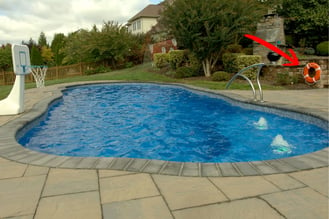 inground pool can boost the safety of all swimmers. Remember, any time children are in the water, it’s important that at least one adult supervise (and preferably without alcohol).
You can read more about pool safety rules in this article.
Average life saving ring cost: $80 to $150
10. Filter Cleaner Tool
Afraid your filter will get dirty and clogged? A filter cleaner tool can help you out. You probably won’t need it when you first open your swimming pool, but it would be nice not to have to run to the pool store if you find that you need it later on.
Pro tip: get a filter cleaning spray to go with it (around $10 - $20).
Average filter cleaning tool price: $40 to $75
11. Algaecide
If your pool had a mortal enemy, it would probably be algae. As we mentioned earlier, algae shouldn’t be an issue for fiberglass pool owners, but concrete and vinyl liner pool owners need to be vigilant to keep the algae at bay. Liner pools can typically collect algae at steps and seams while every inch of a concrete pool with a plaster surface is an alga dream home. A good algaecide should help you quickly clear up an infestation so that you can get back to swimming.
To avoid issues, make sure you're following the guidance provided by your pool's installer or manufacturer.
Average algaecide price: $20 to $50
12. Pool Stain Eraser Tool
Finally, no pool owner’s tool kit would be complete without a stain eraser tool. These little guys are extremely helpful in getting stubborn stains off your pool’s surface (just make sure you get one that’s compatible with your pool type).
Pro tip: some pool tool kits come with interchangeable heads and can provide most of what you need with one purchase.
Average stain eraser tool price: $15 to $35
| Swimming Pool Supplies | Average Pool Supplies Cost |
| Skimmer Net | $20 - $40 |
| Pool Vacuum | $120 - $450 |
| Water Test Kit | $25 - $150 |
| Pool Brush | $20 - $40 |
| Pool Pumice | $15 - $30 |
| Soft Cloths | $10 - $25 |
| Pool Sanitizer | $75 - $500 |
| Pool Shock | $20 - $120 |
| Life Saving Ring | $80 - $150 |
| Filter Cleaner Tool | $40 - $75 |
| Algaecide | $20 - $50 |
| Pool Stain Eraser Tool | $15 - $35 |
What Pool Upgrades Make Maintenance Easier? (Nice-to-Have Items)
If you’re looking to make pool care a little easier, there are a few upgrades worth considering. These aren’t essential, but they can save you time, reduce hands-on work, and simplify your routine once you’ve got the basics down.
1. Automatic Pool Vacuum
We said that pool vacuuming isn't a hassle for most people, and it's not, but it does still take time out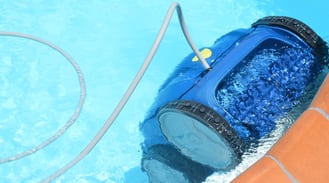 of your day. Wouldn't it be nice if a robot could do the vacuuming for you? An automatic or robotic pool vacuum can clean up the floors and walls of your pool while you work, make dinner, and even sleep.
Average robotic vacuum price: $150 to $2,000+ (most homeowners spend $900 to $2,000 on robotic models)
2. Digital Pool Tester
If you don't want to use a manual pool testing kit, a digital pool tester can simplify the process. Some of them even stay in your pool and can be monitored from a mobile app. While a digital pool tester isn't an absolute must, it can make maintaining your pool easier, and it's a nifty upgrade if you want to automate your inground pool.
Average digital pool tester price: $80 to $300
3. Automatic Chlorinator
Speaking of automation, wouldn't it be great if your pool could sanitize itself? You're always going to have to do some hands-on work, but an automatic chlorinator can do most of it for you. The cool thing about automatic chlorinators is that they sanitize your water as it filters through the system. You can read more about the different types of automatic chlorinators here.
Average automatic chlorinator price: $75 to $200
4. Pool Cover
Depending on where you live, you may or may not need a pool cover to meet local regulations. Either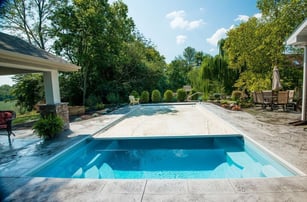 way, it can be nice to have a pool cover to keep leaves and debris out of your pool and add an extra layer of safety to the pool area when no one is watching.
A pool cover can also help heat up your pool if you don't have a pool heater (or don't want to pay the money to use it).
There are different types of pool covers, with winter pool covers being the least expensive and automatic and rolling deck pool covers being the most expensive. You can read more about pool cover types and costs here.
Average pool cover price: $1,500 and up
With multiple sizes and features to choose from, pricing can vary. Want a clearer idea of what your pool might cost? Try our Design and Price tool below.

Final Thoughts on Swimming Pool Supplies
By now, you’ve got a clear picture of what it takes to get started—from the must-have pool supplies that keep everything running smoothly to a few upgrades that can make pool ownership a little more convenient.
The good news is, you don’t have to figure it all out at once. Most folks start with the basics, get comfortable with their routine, and then add on as they go once they see what would actually make things easier.
Give it a little time, and you’ll find your groove. What felt confusing at first starts to feel pretty straightforward, and you’ll know exactly what your pool needs without overthinking it.
Frequently Asked Questions
What pool supplies do I need for a new inground pool?
At a minimum, you’ll need a skimmer net, pool vacuum, water test kit, pool brush, sanitizer (chlorine or salt), and pool shock. These tools help keep your pool clean, your water balanced, and your surface in good condition.
How often should I vacuum and brush my pool?
It’s a good idea to vacuum and brush your pool at least once per week. This helps prevent dirt buildup, algae growth, and staining on the pool floor, walls, and steps.
What are some optional pool upgrades that make maintenance easier?
Popular upgrades include robotic pool vacuums, digital water testers, and automatic chlorinators. These tools can automate cleaning and water care, saving you time and making pool maintenance more convenient.
How much do basic pool supplies cost?
Basic pool supplies can range from around $200 to $800+ upfront, depending on what you purchase. Ongoing costs like chemicals (sanitizer and shock) will vary, but they are typically one of the biggest recurring expenses.

From the Author
Getting a new pool is exciting, but once it’s in the ground, a lot of homeowners start asking the same question, what do I actually need to keep it in good shape?
I’m Jason Hughes, a partner at River Pools Virginia and a fiberglass pool installer with more than 25 years of hands-on experience. Over the years, I’ve worked with hundreds of pool owners who are just getting started, and one of the most common challenges is figuring out which pool supplies are truly necessary, and which ones can wait.
I wrote this article to help simplify that process. My goal is to give you a clear understanding of the tools you’ll use most often, what they cost, and how they fit into your day-to-day routine so you can feel confident taking care of your pool from the very beginning.
From the Manufacturer
At River Pools, we regularly talk with homeowners who are just getting started with their inground pool and trying to figure out what they actually need to maintain it. Pool supplies are often one of the first areas where things can feel a bit overwhelming.
Through our experience manufacturing fiberglass pools and working with independently owned and operated installers across the country, we’ve seen how starting with the right essentials, and adding to your setup over time, can make pool ownership feel much more manageable.
If you’re considering a fiberglass pool and want to understand what owning and maintaining one might look like in your backyard, the next step is connecting with a trusted independent installer in your area. They can help you plan a setup that fits your space, your budget, and your lifestyle.
Ready to start the conversation?

