

Search for topics or resources
Enter your search below and hit enter or click the search icon.
Exploring inground pool options means sorting through a lot, especially when it comes to cost. This guide breaks down what affects the price of an inground pool, how fiberglass, concrete, and vinyl liner pools compare, and what you can expect down the road when it comes to maintenance and ownership.
Our goal is to give you a clear look at your options so you can plan confidently and pick the pool that feels right for your family and your backyard.
We also put together comprehensive buying guide that answers not only budget questions but all common questions people have when buying an inground pool.
To help you plan confidently, here’s a quick breakdown of what we’ll cover below:
Most inground pools cost between $45,000 and $225,000 installed, depending on the type of pool, its size, where you live, and what's included in the project. Fiberglass pools range from $85,000 to $200,000, concrete (gunite) pools from $95,000 to $225,000, and vinyl liner pools from $45,000 to $100,000. Costs for electrical, patio, fencing, and extras are often additional.
Here are the factors that move a pool project toward the lower or higher end:
When you're thinking about cost, it's helpful to think about it in two parts—what you pay to get the pool in the ground, and what it’ll cost to own over time. Both can look pretty different depending on where you live and what type of pool you choose.
Each type of inground pool is built differently, so each comes with its own price range and its own ownership costs. Here's how fiberglass, vinyl liner, and concrete pools compare.
Fiberglass pools typically range from $85,000 to $200,000 for a full installation. Fiberglass pools offer a quick install, durability, and long-term savings. River Pools shells are installed exclusively through independent installers to ensure quality and proper handling.
.png?width=1380&height=750&name=Package%20Type%20(2).png)
Standard packages can look different depending on the company, so it’s worth double-checking what’s actually included. Some don’t cover key items like permits, delivery, or even water fill.
You’ll also want to look closely at things like warranties, the type of equipment provided, and who manufactures the fiberglass shell.
And don’t forget about the extras, most homeowners spend another $25,000–$50,000 on things like electrical, patio work, fencing, and accessories.
For more on the costs that tend to sneak up, check out our article: Top 7 Hidden Costs of an Inground Pool Project.

Turn-key concrete pools typically range from $95,000 to $225,000, with basic packages starting around $85,000 depending on the size and complexity.
Just to be clear, a gunite pool is concrete.
Gunite is simply a way of applying the concrete that makes up the pool shell.
When comparing a concrete pool vs. a fiberglass pool, the key difference in upfront cost comes down to materials and labor. Concrete requires more of both, which typically drives a higher price out the gate.
Many folks are surprised to learn that the price gap between concrete and fiberglass pools isn’t as wide as expected.
But while upfront costs of concrete and fiberglass pools can overlap, concrete often brings higher long-term expenses due to resurfacing, chemical use, and longer construction timelines.
Related links:
Vinyl liner pools typically run from $45,000 to $100,000 for a full installation, making them most likely to have the lowest upfront cost of the three pool types.-1.png?width=1843&height=750&name=Package%20Type%20(1)-1.png)
While many homeowners find the price of vinyl pools attractive, there are a few things to keep in mind. Vinyl liners will typically need to be replaced every 5 to 9 years, which adds to the long-term cost. They’re also more prone to damage and because of that require more care compared to fiberglass.
That said, if you're working with a tighter budget upfront, vinyl liner pools remain a popular and widely used option.
Related links:
What you pay to get the pool in the ground is only part of the picture. This chart compares the estimated 10-year maintenance cost of each pool type:
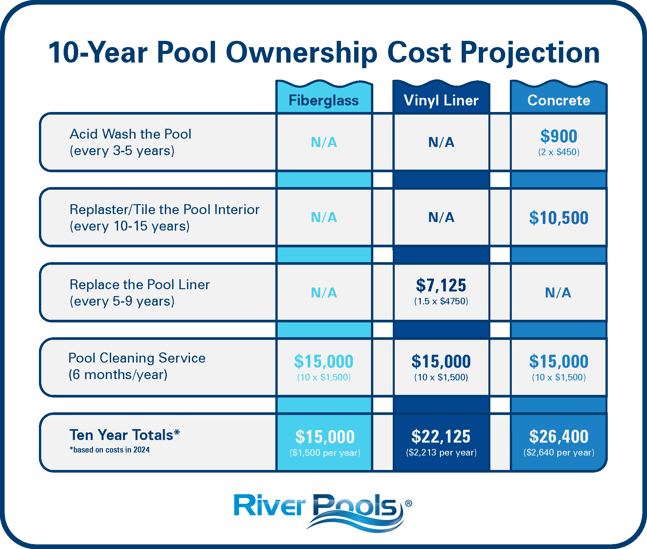
You can see the huge disparity between the maintenance costs of these three types of swimming pools.
Why is the cost to own a fiberglass pool so much less?
First, they are incredibly durable.
Second, they are very efficient.
Let's take a closer look.
One big reason fiberglass pools hold up so well is the gelcoat layer, that smooth, protective surface you see and touch. Thanks to advancements over the years, modern gelcoats can last longer and can stand up better to wear and tear.
With the right maintenance, a quality gelcoat can last for decades, possibly even a lifetime.
By comparison, concrete pools typically need resurfacing every 10 to 15 years, which can be a pretty big investment. Vinyl liners typically need to be replaced every 5 to 9 years, and those costs add up too.
Fiberglass pools tend to be more efficient because they have a faster install time, require less day-to-day care, and often cost less over time.
The smooth surface helps prevent algae from taking hold, which can mean fewer chemicals and not as much time spent on upkeep.
Depending on your setup, you may also be able to run your pump and filter at lower speeds or for shorter periods which can provide substantial energy savings.
Over the years, many homeowners also see fewer maintenance and repair costs, making fiberglass a smart, long-term option for many families.
The right choice comes down to balancing upfront cost with long-term ownership, and picking what works best for your backyard and your budget. Vinyl liner has the lowest entry price, concrete offers the most design freedom, and fiberglass is where we see many families land when they want a faster install and lower ongoing costs.
Check out the other questions below to continue your journey to find the perfect pool. You can also further explore the differences between fiberglass, concrete, and vinyl liner pools.
Related Links: