

So, what type of inground pool is best for you?
The honest answer: it depends on what matters most to you and your family.
Some homeowners want the lowest maintenance possible. Others care most about customization or upfront cost. And for many folks, it’s about finding the right balance between installation time, durability, and long-term value.
The good news? You’ve got three solid inground pool options, fiberglass pools, vinyl liner pools, and concrete pools, and each one shines in different areas.
In this guide, we’ll walk you through the most important questions to ask so you can confidently choose the best inground pool for your backyard.
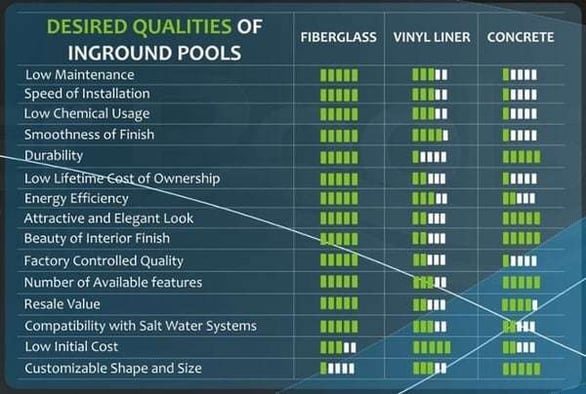
What should you compare when choosing an inground pool?
- Maintenance
- Install speed (and messiness)
- Durability
- Attractive
- Upfront cost and long-term cost
- Customizability
- Surface texture
Which pool type has the least maintenance?
Concrete
Concrete pools require the most ongoing maintenance of the three pool types.
Because the surface is porous, it can affect water chemistry and create an environment where algae can grow more easily. That means more time, effort, and often more money spent on upkeep.
Most concrete pool owners can expect:
- Daily pump and filtration
- Weekly brushing and chemical balancing
- Acid washing every 3–5 years
- Resurfacing every 8–12 years
Many homeowners choose to hire a professional service to manage this, especially over time.
Vinyl Liner
Vinyl liner pools require less maintenance compared to concrete pools, but still come with ongoing upkeep and periodic replacement costs.
Because the liner surface is non-porous, it doesn’t impact water chemistry the same way concrete does. However, algae can still develop in areas with poor circulation, like corners and seams.
The biggest long-term maintenance factor is the liner itself, which will need to be replaced over time.
Most vinyl liner pool owners can expect:
- Daily pump and filtration
- Weekly brushing and chemical balancing
- Routine debris removal
- Liner replacement every 5–9 years
While day-to-day maintenance is manageable, that liner replacement is a significant cost and consideration over the life of the pool.
Fiberglass
Fiberglass pools offer the lowest maintenance of the three because the gelcoat surface is smooth and non-porous. This means it makes it harder for algae to latch on, and has less impact on water chemistry.
Most fiberglass pool owners can expect:
- Running the pool’s pump/filter system daily
- Cleaning out debris
- Balancing the water chemistry weekly
- Brushing the pool weekly
Lower maintenance doesn’t mean no maintenance, but it does mean fewer major repairs and more predictable upkeep over time, especially when the pool is properly maintained.
Which pool type has the fastest installation?
Concrete
Concrete pools typically take the longest to install.
In most cases, you can expect a timeline of at least 3 months, and sometimes longer depending on weather, design complexity, and contractor availability.
Because the pool is built on-site, the process involves multiple phases, excavation, framing, plumbing, curing, and finishing, which can extend the overall timeline.
Vinyl Liner
Vinyl liner pools generally take about 4–8 weeks to install.
This timeline can vary based on the design and site conditions, but overall, vinyl liner pools offer a faster installation than concrete while still allowing for some customization.
Fiberglass
A fiberglass pool installation is typically the fastest, with most projects completed in about 3–6 weeks.
Because the pool shell is manufactured ahead of time, installation focuses primarily on site prep and setting the pool in place.
In many cases, the pool itself can be set and filled within a couple of days, with the remaining time dedicated to finishing touches like the patio and surrounding area.

Which pool type is the most durable?
Concrete
Concrete pools are known for their strong, long-lasting structure.
The underlying shell is extremely durable and can last for decades. However, the interior surface, whether plaster, aggregate, or tile, will wear down over time and require refinishing.
Salt chlorine generators also don't do well with plaster or aggregate surfaces. The salt in the water wears away at the plaster faster, meaning you have to resurface even sooner.
Vinyl Liner
Vinyl liner pools have a durable structural frame, but the liner itself is a component that will need to be replaced over time.
The liner is subject to wear from use, chemicals, and environmental factors, which means it won’t last as long as the pool’s structure.
If a leak occurs in a vinyl pool with metal wall panels, exposure to saltwater can accelerate corrosion over time. Polymer wall panels, on the other hand, are not affected in the same way.
Fiberglass
Fiberglass pools are designed with both durability and flexibility in mind.
The shell can adjust slightly with ground movement, which helps reduce the risk of cracking over time. This makes fiberglass a strong option in a variety of soil conditions.
If properly manufactured and maintained, the gelcoat surface should never need to be refinished either.
Which pool type is the most attractive?
Concrete
Concrete pools are often known for their classic, high-end appearance.
Because they’re fully customizable, homeowners can create everything from simple, clean designs to more elaborate styles like geometric layouts or natural, freeform pools.
With proper maintenance, concrete pools can maintain a strong visual appeal over time, especially with upgraded finishes like tile or polished aggregate.
Vinyl Liner
Vinyl liner pools offer a clean and simple look, with a variety of patterns and colors available for the liner itself.
While the appearance is typically more straightforward, many homeowners enhance the overall look with features like patios, landscaping, and water elements.
With thoughtful design choices around the pool, vinyl liner pools can create an attractive and enjoyable backyard space.
Fiberglass
Fiberglass pools are designed with both aesthetics and functionality in mind.
They come in a wide range of shapes, colors, and built-in features like tanning ledges, steps, and seating areas, all molded into the pool for a clean, cohesive look.
Whether you're going for a simple, modern design or a more detailed backyard setup, fiberglass pools offer a polished appearance.
With multiple sizes and features to choose from, pricing can vary. Want a clearer idea of what your pool might cost? Try our Design and Price tool below.

What are the upfront and long-term costs of each pool type?
When evaluating cost, it’s important to look at both the initial investment and what you’ll spend over time to maintain the pool.
Let’s break it down.
Upfront cost of an inground pool
-
Concrete pools generally cost $85,000–$225,000 upfront.
-
Most vinyl liner pools cost about 45,000–$100,000 upfront.
-
Fiberglass pools typically cost $85,000–$200,000 upfront.
Long-term cost of a pool
While upfront cost gets most of the attention, long-term ownership is where the differences really start to show.
Concrete
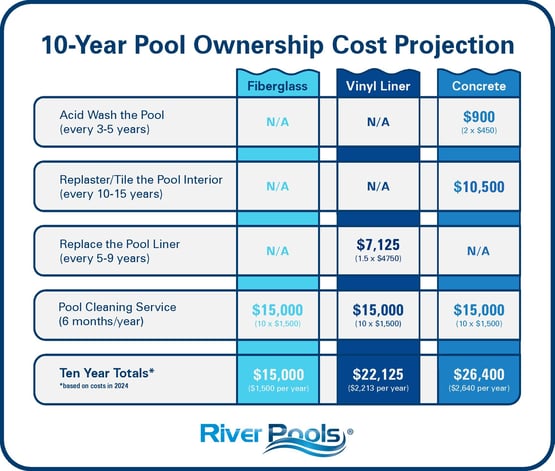
Concrete pool maintenance will cost about $26,400 over 10 years.
- Acid washes every 3–5 years (~$900 over 10 years)
- Resurfacing and tile work (~$10,500+)
- Higher chemical usage
Vinyl Liner
Vinyl liner pools cost about $22,125 in maintenance over 10 years.
- Replacing the liner every 5–9 years (about $7,000 each time)
- Standard cleaning and chemical costs
Fiberglass
A fiberglass pool only costs about $15,000 in maintenance over 10 years.
- No resurfacing required
- No liner replacements
- Standard cleaning and chemical costs
What this means for you
If you're planning to stay in your home long-term, this is one of the most important sections to pay attention to.
A pool that costs less upfront doesn’t always cost less over time.
Which pool type is the most customizable?
Concrete
Concrete pools are crazy customizable.
You know those pools you've seen that are shaped like a guitar? Or a duck? Odds are good that they're concrete.
Because they’re built on-site, they can be designed in virtually any shape, size, or depth. From simple geometric layouts to more elaborate, freeform designs, concrete gives homeowners the most flexibility.
If you have a very specific vision, or a unique backyard space to work with, concrete provides the most design freedom.
Vinyl Liner
Vinyl liner pools also allow for a good amount of customization.
They can be built in a variety of shapes and sizes, offering flexibility for different backyard layouts. However, because the liner must be manufactured to fit the pool, highly intricate designs and detailed features can be more challenging to execute.
For many homeowners, vinyl liner pools offer a solid middle ground between flexibility and simplicity.
Fiberglass
Fiberglass pools are limited to the shapes and sizes of preexisting molds. They generally don't get bigger than 16 by 40 ft.
However, there are sooo many options out there. Tanning ledges, bench seats, deep ends...pretty much everyone can find a design they love.
While the pool shape is pre-designed, there are many ways to customize the finished look through color, patio design, water features, accessories, and more.
You can explore our fiberglass pool designs to see examples of available models and features.

Which pool type has the best surface?
Concrete
Concrete pools offer a variety of surface finish options, each with a different look and feel.
- Plaster is a common choice and has a more textured feel compared to other pool types.
- Exposed aggregate provides added durability and visual appeal, though it has a slightly bumpy texture underfoot.
- Tile offers a smooth, premium finish and is often used in higher-end designs.
- Polished aggregate is one of the smoothest concrete options, combining durability with a more refined surface feel.
The overall experience will depend on the finish you choose, but concrete surfaces generally have more texture than other pool types.
Vinyl Liner
Vinyl liner pools have a soft, smooth surface that’s comfortable to the touch.
The liner creates a consistent feel throughout the pool, with only a slight seam where sections of the liner meet. This seam is typically subtle and doesn’t impact usability.
For many homeowners, vinyl offers a comfortable and forgiving surface underfoot.
Fiberglass
Fiberglass pools are known for their smooth, non-porous gelcoat surface.
This finish is comfortable to the touch and helps reduce friction while swimming or lounging in the pool.
To enhance safety, steps, seats, and entry points typically include a light anti-slip texture. This added grip is subtle and designed to provide stability without sacrificing comfort.
What pool type fits me best?
When it comes to which pool type might be a good fit for you, here’s the simplest way to think about it:
Choose concrete if you want:
- A fully custom shape or depth
- A high-end, one-of-a-kind design
- And you’re comfortable with higher maintenance and long-term costs
Choose vinyl liner if you want:
- The lowest upfront investment
- A larger pool for the price
- And you're okay with replacing the liner over time
Choose fiberglass if you want:
- The lowest maintenance option
- A fast, predictable installation
- A durable pool built to last
- And strong long-term value
At the end of the day, the “best” pool is the one that fits your lifestyle, your budget, and how you want to enjoy your backyard.

Want to compare the pool types in more depth?
We’ve broken down each comparison into quick, easy-to-watch videos below.
Click on any thumbnail to watch the full video on YouTube.
.webp?width=1280&height=720&name=maxresdefault%20(3).webp)
.webp?width=1280&height=720&name=maxresdefault%20(1).webp)
.webp?width=1280&height=720&name=maxresdefault%20(2).webp)
Frequently Asked Questions
Which inground pool requires the least maintenance?
Fiberglass pools generally require the least maintenance. Their smooth, non-porous surface makes it harder for algae to latch on and reduces the need for frequent cleaning and resurfacing. Concrete pools typically require the most maintenance, while vinyl liner pools fall in the middle.
Which type of pool is the most durable?
All inground pools are built to last, but their surfaces wear differently over time.
- Concrete: Strong structure, resurfacing every 8–12 years
- Vinyl liner: Liner replacement every 5–9 years
- Fiberglass: Long-lasting surface, typically no resurfacing
What type of inground pool is the cheapest?
Vinyl liner pools usually have the lowest upfront cost, typically ranging from $45,000 to $100,000. However, when you factor in long-term costs like liner replacement, fiberglass pools often end up being the most cost-effective over time due to lower maintenance and fewer major repairs.
Which pool type has the fastest install time?
Fiberglass pools are typically the fastest to install, usually taking about 3–6 weeks. Because the pool shell is pre-manufactured, installation is quicker and more streamlined. Vinyl liner pools generally take 4–8 weeks, while concrete pools can take 3 months or longer depending on the project.
Which type of inground pool is the most customizable?
Concrete pools offer the most customization, with virtually unlimited shapes and designs. Vinyl liner pools allow for flexibility but have some limitations with detailed shapes. Fiberglass pools come in pre-designed molds, but still offer plenty of built-in features and ways to personalize your backyard.
From the Author
Choosing the right inground pool can feel like a lot, different materials, different costs, and a lot of opinions online.
I’m Cristian Shirilla, Marketing Manager at River Pools and co-owner of a fiberglass pool installation company in Virginia. Over the years, I’ve worked closely with homeowners researching fiberglass, vinyl liner, and concrete pools, helping them sort through the noise and understand what really matters for their situation.
I wrote this article to give you a clear, side-by-side look at each pool type so you can confidently decide what’s best for your backyard.
From the manufacturer
At River Pools, we work with homeowners every day who are trying to figure out which type of inground pool is right for their backyard. It’s one of the biggest decisions in the entire process, and there’s a lot to consider, from maintenance and cost to installation and long-term value.
Through our experience working with families and independent installers across the country, we’ve seen how different priorities lead to different choices. What matters most is having clear, honest information so you can confidently choose the pool that fits your goals, your space, and your lifestyle.
If you’re considering a fiberglass pool and want to see how it might fit your backyard, the next step is connecting with a trusted independent installer in your area. They can walk your property, talk through design options, and help you plan a project that works for your family.
Ready to start the conversation?

