

We spend a lot of time thinking about how our pool looks during the day, but not as much about how it looks once the sun goes down.
That’s where lighting starts to come into play.
Without the right lighting, it’s harder to see where you’re going, certain areas of the backyard get lost, and the whole space just doesn’t feel as usable.
The good news is, you don’t need an overly complicated setup to get it right. A few well-thought-out decisions can make a big difference.
In this guide, we’ll walk through practical pool lighting ideas, including where to place lights, what types to use, and how to create a setup that works for both design and function.
Where should you place lights around your pool?
When it comes to pool lighting ideas, where you place your lights around your landscape matters.
Before you think about styles or fixtures, start with the areas you actually use. Walkways, steps, seating areas, and key features should all be easy to see and enjoy at night.
From there, you can layer in lighting to highlight the parts of your backyard you want to stand out.
Here are some of the most common, and effective, places to add lighting:
-
Steps
-
Paths and walkways
-
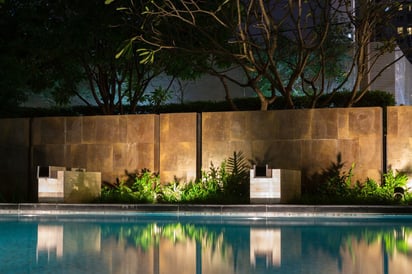
Walls
-
Water features
-
Perimeters
-
Patios
-
Trees and plants
-
Statues and decorations
-
Seating areas
-
Garden beds
Lighting these areas does two important things: it improves safety and helps highlight the features you care about most.
Step and path lighting make it easier to move around by reducing the risk of trips and falls, while accent lighting can draw attention to trees, walls, and water features. Adding lighting to patios and seating areas also makes those spaces more usable once the sun goes down.
If you’ve got a fire pit, water features, or even a favorite place to sit, a little light can go a long way in helping it stand out at night.

Types of landscape lights
Now that you have a better idea of where your lighting should go, let’s look at the actual light fixtures you can use to get the job done.
Here are some of the most common options used in backyard pool designs:
1. Floodlights
Best for lighting large areas like patios or open yard space. If you want visibility across a wide area, this is your go-to.
2. Spotlights
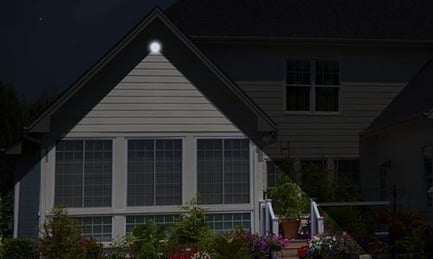
Spotlights are used to highlight your favorite features, such as a tree, a wall, or a fountain. You can use spotlights to create up lighting or downlighting for different effects.
Up lighting is when the light is pointed upward at an area or object, such as a plant, wall, or statue. Downlighting is when the light shines down from above, like from up in a tree.
3. Hardscape lights
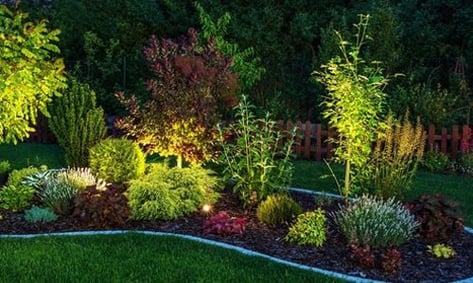
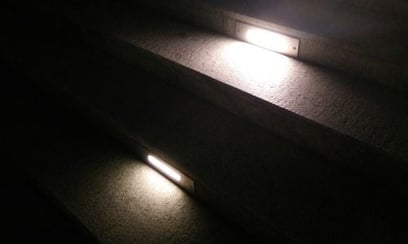
These lights are usually embedded in concrete and stone steps, walls, and pathways for safety reasons.
They're often subtle but still provide enough visibility for people to see where they're going. You might see these in steps leading towards the pool or integrated in seating areas around it.
Pro tip: make sure that your lights are not in violation of national or regional code in terms of how far they need to be from the surface of the pool. This will depend on the light's IP rating, so check with a professional or the manufacturer before doing any installations.
4. Path lights
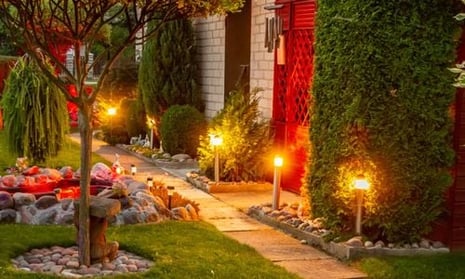
Path lights are used to line and light pathways and stairways. These commonly substitute hardscape lights and come in a wide range of styles.
Try lining your path from the house to the pool with a combination of path lights and hardscape lights. Just make sure to use the right type of lights for areas that are close to the water.
5. Torches
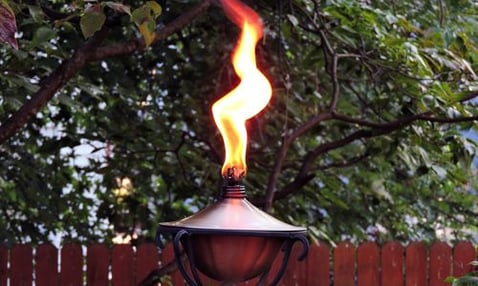
Outdoor torches, or tiki torches, can be used to light the perimeter of your yard. These usually come in tropical styles and add a lot of character to the area around the pool.
Caution: You should always be careful when using open flames around your property and the property of your neighbors. Solar, battery operated, and electric torches are good alternatives to flame torches.
6. String lights
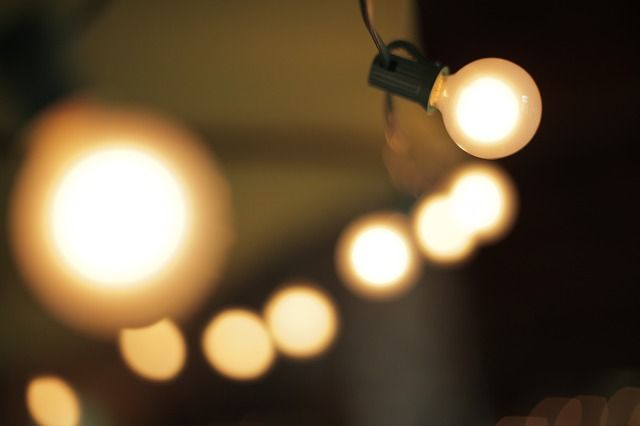
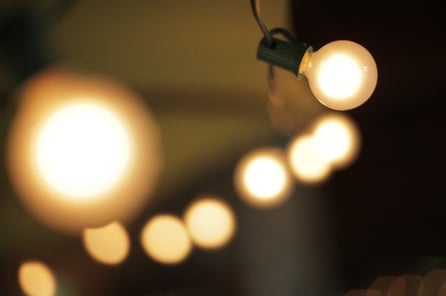
We all know that string lights and fairy lights aren’t used for lighting as much as they are for aesthetics, but they can add both light and personality to your space.
These are good for hanging over patios and wrapping around trees and other plants. Get creative with the placement of your string lights, but be sure that you don’t hang them over your pool or any other contained water such as fountains, tanning ledges, and ponds!
7. Well lights
Well lights are usually embedded in the ground and can be used to spotlight certain areas or to create additional lighting in dark patches. They can be installed flush with the ground or they can remain exposed, depending on your needs.

How to choose the right pool lighting system
Once you know the types of lights you can use, the next step is choosing how you want them to be powered and set up.
For most homeowners, LED low-voltage lighting is the way to go. It gives you a clean, professional look without being overly complicated to install, and it’s energy-efficient and long-lasting.
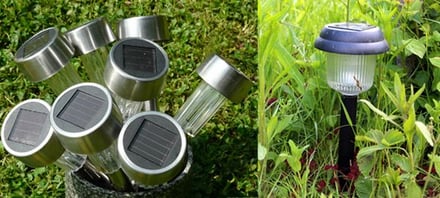
If you’re looking for something simpler or more budget-friendly, solar lighting can be a good option, especially for accent areas. Since it doesn’t require wiring, it’s easy to install, but it’s typically not as bright or consistent as wired systems.
Bringing your lighting together
Up to this point, you’ve decided where lights go and what type of setup to use. From here, it’s about how it looks, how it works, and how it all comes together in your space.
Color and beam options
Some areas call for softer, warmer light, especially around seating spaces or patios. Other spots, like trees or taller features, can benefit from cooler tones or more focused beams.
For example, lighting placed higher up in a tree can create a subtle “moonlight” effect, while low, warm lighting along a path keeps things comfortable and easy to navigate.
The goal isn’t to match everything perfectly. It’s to create a balance that feels natural and works with the space.
Lighting control options
Another way to improve your setup is by making it easier to use.
A lot of homeowners start out manually turning lights on and off, and for some, that works just fine. But if you’re looking to simplify things a bit, automation is a nice upgrade to consider.
With a smart system, you can control your lighting from your phone, set schedules, and make small adjustments without having to think about it. It’s one of those features you don’t necessarily need, but it can make a noticeable difference.
Pool lighting ideas
If you’re looking for a few easy ways to bring your lighting plan to life, here are some ideas that tend to work well in most backyards:
-
Light your water features with spotlights.
-
Up light or downlight trees and plants with spotlights or well lights.
-
Light your paths with path lights and hardscape lights.
-
Use floodlights to illuminate your patio and other high-traffic areas.
-
Up light a wall with one or more spotlights.
-
Arrange tiki torches around the perimeter of your pool area.
-
Add hardscape lights to steps and seating areas.
-
Spotlight pottery, statues, and other unique features.
-
Hang string lights over your patio.
Not every idea will apply to every backyard, but a few well-chosen elements can make a noticeable difference in how the space comes together.

Who should install your lights?
When it comes to installation, it really depends on the type of lighting setup you’re working with.
If your project involves wiring or electrical work, we highly recommend bringing in a licensed electrician, especially when you’re working around water. It’s the safest way to make sure everything is installed correctly and up to code.
That said, not every lighting setup requires professional installation.
LED low-voltage systems are generally more manageable if you’re comfortable with basic installation, and they’re designed to be more user-friendly than traditional high-voltage systems.
Solar-powered lights and torches are even simpler. Since they don’t require wiring, they can usually be placed and adjusted on your own without much experience.
In the end, it comes down to your comfort level. If you’re ever unsure, it’s always worth getting a professional involved to make sure everything is done safely.
A simple approach to pool lighting
From deciding where lights should go, to choosing the right fixtures and setup, to thinking through how everything looks and functions together, each step plays a role in how your backyard comes together after the sun goes down.
The best pool lighting ideas are usually the simplest ones, lighting the areas you use most, highlighting a few key features, and keeping everything balanced.
If you focus on that, you’ll end up with a space that not only looks good at night, but actually works the way you want it to.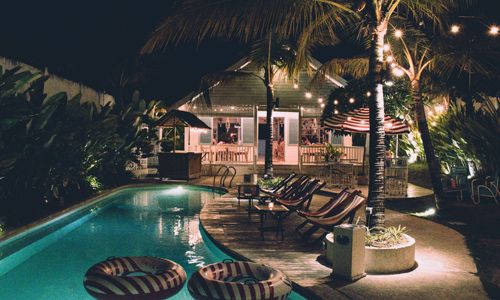
Frequently Asked Questions
What are the best pool lighting ideas for a backyard?
The best pool lighting ideas usually focus on a mix of function and design. Start by lighting key areas like walkways, steps, and seating spaces for safety, then add accent lighting to highlight features like trees, walls, or water features. In most cases, a few well-placed lights are enough to make the space feel complete.
Where should I place lights around my pool?
Pool lighting should be placed anywhere you need visibility or want to highlight a feature. Common areas include paths, steps, patios, seating areas, and around water features. The goal is to make the space easy to navigate while also drawing attention to the parts of your backyard you enjoy most.
What types of pool lights should I use?
There are several types of fixtures commonly used around pools, including spotlights, path lights, floodlights, hardscape lights, and string lights. Each serves a different purpose—some improve visibility, while others are used to highlight features or add ambiance.
Is LED or solar pool lighting better?
LED low-voltage lighting is typically the best option for most backyards because it’s reliable, energy-efficient, and provides consistent light. Solar lighting can be a good alternative for smaller accent areas since it’s easy to install and doesn’t require wiring, but it’s usually not as bright or consistent as wired systems.
From the Author
Planning out details like lighting can feel like a small part of the overall project, but it often has a big impact on how your backyard looks and functions once everything is finished.
I’m Jason Hughes, a partner at River Pools Virginia and a fiberglass pool installer with more than 25 years of hands-on experience. Over the years, I’ve worked with thousands of homeowners designing and installing pools, and I’ve seen how choices like lighting can change the way a space is used after the sun goes down.
I put this guide together to help you think through some practical pool lighting ideas, not just what looks good, but what actually works in a real backyard setting. My goal is to give you a clear starting point so you can make confident decisions as you plan your space.
From the Manufacturer
At River Pools, we know that a backyard pool is about more than just the pool itself. The surrounding space, your patio, landscaping, and features like lighting, all play a role in how the area looks and functions over time.
As homeowners plan their pool and surrounding space, lighting becomes part of the bigger picture alongside layout, materials, and how the space will be used day to day.
Articles like this are meant to give you a clearer understanding of how those elements work together so you can make informed decisions as you plan your backyard.
If you’re considering a fiberglass pool and want to see how lighting and other design elements could come together in your backyard, the next step is connecting with a trusted independent installer in your area. They can help evaluate your space and walk through options that fit your goals.
Ready to start the conversation?

Topics:
