

A reliable pool filtration system helps keep your water clear, comfortable, and ready for swimming. Without proper filtration, your backyard paradise can quickly turn into a murky, unhealthy mess. Many pool owners find that clean, well‑filtrated water contributes to a more enjoyable and healthier swimming experience.
The Importance of a Clean Pool
Proper pool filtration is the cornerstone of pool ownership. Without it, your pool becomes a breeding ground for bacteria, algae, and debris. This can cause skin irritation, ear infections, and other health issues. A clean pool provides a safe, healthy environment for family fun and relaxation, especially in climates with intense heat or high use.
What Is a Pool Filtration System?
A pool filtration system is the heart of your pool’s water care. Think of it as your pool’s “kidneys,” continuously removing impurities from the water. It typically consists of a circulation system, including the pump, filter, skimmers, drains, and return jets. These parts circulate water, capture debris, and returns clean water back to the pool.
Core Components of Your Pool Filtration System
The Pool Pump: The Heart of Filtration
The pool pump moves water from the pool, through the filter, and back again. Without a pump, water would sit stagnant. Here are the different kinds of pool pumps:
-
Single‑Speed Pumps: Constant speed and energy use; lower upfront cost but higher operating cost.
-
Dual‑Speed Pumps: High speed for vacuuming or chemical mixing; low speed for daily filtration to save energy.
-
Variable‑Speed Pumps: Most energy‑efficient; programmable speeds reduce noise and save on utility bills.
Proper pump sizing, based on your pool’s volume and turnover needs, is essential for efficient filtration.
The Filter: The Workhorse for Water Clarity
After water moves through the pump, it enters the filter, where debris and particles are removed.
Skimmers and Main Drains collect debris at the surface and bottom, pushing water toward the filter.
Return jets send clean water back into the pool, keeping the water circulating so it’s harder for algae to take hold.
With multiple sizes and features to choose from, pricing can vary. Want a clearer idea of what your pool might cost? Try our Design and Price tool below.

How does a Pool Filtration System Work?
The filtration cycle moves water from your pool, through a cleaning process, and back again:
- Water Inflow: Skimmers catch floating debris while main drains capture heavier particles.
- Pump Action: The pump draws water through the system, creating circulation.
- Filtration Stage: Water flows through sand, cartridge, or DE media, trapping particles.
- Return Jets: Clean water re‑enters the pool, promoting circulation and completing the cycle.
.png?width=423&height=470&name=Screenshot%20(214).png)
Ideally, your pool water should turn over (pass through the filter) at least once every 6-8 hours.
What are the different types of Pool Filters?
Choosing the right pool filter depends on your goals for clarity, maintenance, and efficiency:
Sand Filters: Traditional and Durable
Sand filters use special filter sand to trap debris.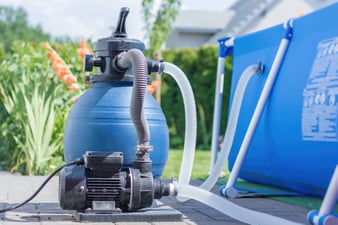
Pros:
-
Lower upfront cost
-
Easier operation
-
Durable and lower‑frequency maintenance
Cons:
-
Can be less efficient with fine debris
-
Requires backwashing (tends to waste water)
-
Sand needs replacing typically every 3-5 years
Best For: Large pools and owners who prioritize ease over fine clarity.
Cartridge Filters: Efficient and Low Water Waste
Cartridge filters use pleated filter elements that trap particles as fine as 5 microns or less.
Pros: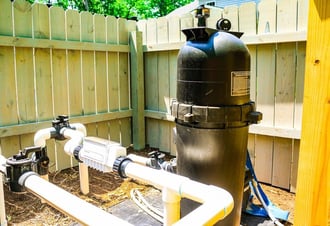
-
Excellent filtration
-
No backwashing (saves water)
-
Compact design
Cons:
-
Cartridges require routine rinsing
-
Replacement, typically every 1–3 years, adds cost
Best For: Small to mid‑size pools and environmentally conscious owners.

DE Filters: The Gold Standard for Clarity
Diatomaceous Earth (DE) filters trap microscopic particles as small as 2–5 microns using fossilized diatom particles.
Pros: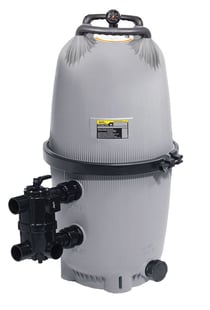
-
Best clarity and filtration
-
Handles heavy use and fine debris well
Cons:
-
Highest cost and maintenance
-
Requires regular “recharging” with new DE powder
Best For: Owners who want the absolute clearest water and superior filtration.
Choosing the Right Filter
Your ideal filtration system depends on:
-
Pool Size: Larger pools need more robust filtration.
-
Budget: Include upfront cost, maintenance, and long‑term operational costs.
-
Desired Clarity: Higher clarity usually means higher cost and maintenance.
-
Maintenance Preference: Consider how involved you want to be with filter upkeep.
-
Local Regulations: Some areas restrict backwashing or DE disposal.
Essential Maintenance for Your Pool Filtration System
Regular maintenance keeps your filtration system working efficiently and extends equipment life:
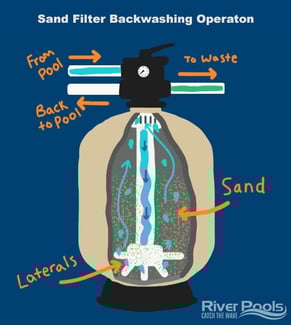
Sand Filter Backwashing
When: When the pressure gauge reads 8–10 PSI above normal or flow weakens.
How:
-
Turn off the pump
-
Set the valve to “BACKWASH”
- Turn pump back on
-
Run until water is clear
- Turn pump back off
- Set the valve to "RINSE" or "CLEAN"
- Turn the pump back on to return to normal filtration.
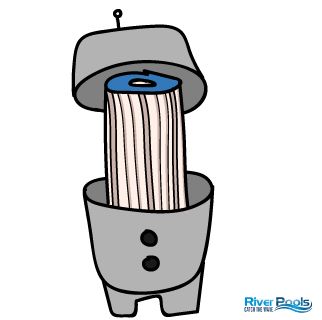
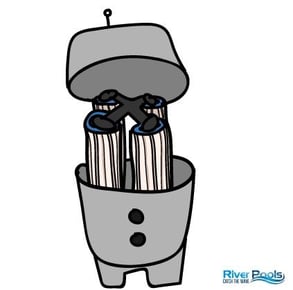
Cartridge Filter Cleaning
When: Pressure rises 8–10 PSI above normal or flow drops.
How:
- Turn pump off
- Release pressure using the air relief valve.
- Open the filter and remove the cartridge(s).
- Rinse thoroughly with a hose, spraying between pleats.
- Soak in filter cleaner if oily or heavily dirty (optional).
- Reassemble the filter.
- Turn the pump back on and release trapped air using the air relief valve until water flows steadily.
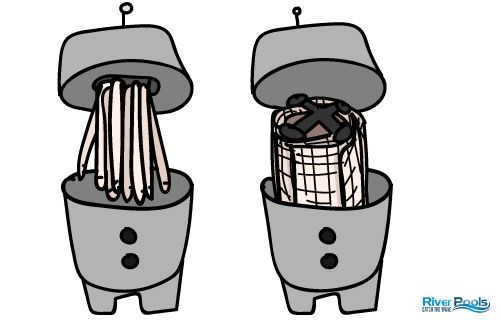
DE Filter Recharging
When: After backwashing (typically every 4–8 weeks).
How:
-
Mix DE powder with water in a bucket
-
Pour slurry into the skimmer as the pump runs
Regular Inspections
Check for leaks, listen for pump noise changes, inspect seals and O‑rings, and monitor pressure readings. Early detection prevents bigger issues.
Common Filtration Problems & How to Fix Them
-
Cloudy Water: Often due to filter issues, imbalanced chemicals, or insufficient run time.
-
Low Flow/Weak Jets: Could be clogged filters, pump issues, or blocked skimmer baskets.
-
Leaks: Tighten fittings and replace old seals or o‑rings.
Tips to Keep Water Crystal Clear
Balance Water Chemistry
Filtration works best when pH, sanitizer, alkalinity, and hardness are in balance.
Run the Filter Long Enough
Aim for 2 turnovers daily, which depends on pump size and pool volume.
Brush & Vacuum Regularly
Brush the walls and vacuum the pool floor to remove dirt and debris before it builds up.
Use Enhancements
-
Clarifiers & Flocculants: Help tiny particles clump together for easier filtration.
-
Smart Pool Tech: Monitors pressure, flow, and chemistry to keep your system running efficiently.

Conclusion: Invest in Clean Water and Peace of Mind
A well‑maintained pool filtration system isn’t about avoiding problems, it’s about enhancing your enjoyment and protecting your investment. By understanding how your system works and performing routine maintenance, you keep your water sparkling and your pool healthy for years of fun.
Frequently Asked Questions
What are the main components of a pool filtration system?
The main components include the pool pump, filter (sand, cartridge, or DE), skimmers, main drains, and return jets. These parts work together to circulate water, remove debris, and return clean water back into the pool.
How often should I replace my pool filter?
You should replace your pool filter based on its type: sand filters typically last 3–5 years, cartridge filters need replacement typically every 1–3 years, and DE filter grids last around 5–10 years, though the DE powder itself is replenished regularly.
What's the ideal run time for a pool filter?
The ideal run time is long enough to turn over your pool’s entire volume at least once per day, but ideally twice. For most residential pools, this means running the filter 8–12 hours daily, though this varies based on pump size and pool volume.
How do I choose the correct size filter for my pool?
Filter sizing depends on your pool’s gallon capacity and desired turnover rate. When it down, check the manufacturer's recommendations and opt for a slightly larger filter to ensure optimal efficiency and lifespan.
What is turnover rate for a pool filtration system?
Turnover rate is the amount of time it takes to circulate the number of gallons in your pool through the filtration system once. A good system will achieve a full turnover every 24 hours to maintain clean, safe water.

From the Author
Pool filtration doesn’t always get the spotlight, but it’s the unsung hero of clear, healthy water. I’m Cristian Shirilla, Director of Marketing at River Pools and a co-owner of a fiberglass pool installation company in Virginia. I wrote this article because so many folks I’ve spoken with over the years want to enjoy their pool and not spend their weekends battling cloudy water. A solid understanding of your filtration system makes pool care less frustrating, and my hope is this article helps break it down in a way that’s practical, clear, and easy to act on.
From the Manufacturer
At River Pools, we know that a well-functioning filtration system is what keeps your pool clean, comfortable, and low-maintenance over the long haul. As a manufacturer, we’ve seen how proper filtration impacts not just water clarity, but also the overall pool ownership experience. This article is shaped by what we’ve learned from supporting thousands of homeowners and independent installers across the country. Our goal is to share simple, useful insights so pool owners can enjoy more swim time, and spend less time troubleshooting murky water or worn-out equipment.
Ready to start the conversation?

