

Quick answer
Yes, a fiberglass pool can often still go in if your builder hits bedrock while excavating. Your builder will either break and remove enough rock to reach the planned elevation, or, when the property and design allow it, elevate the pool and adjust the grade or retaining wall around it. The biggest factors are how much rock there is, how hard it is to break, and what the elevation change requires.
Key points
- Bedrock is a real possibility when building a pool in some areas of the country.
- Limestone and flint can be difficult and time-consuming to break.
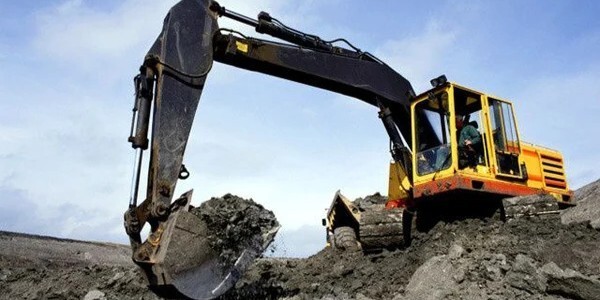
- Your builder may use an excavator-mounted hydraulic hammer to reach the required elevation.
- Elevating the pool can be an alternative when the grade and design allow it.
- Rock work or a larger retaining wall can add to the project cost.
- Visible rock outcrops are a signal that a different placement or plan may be worth considering.
One of the questions I hear from homeowners is, "What happens if you start digging and hit rock?"
I understand why people ask. You can see the trees, slopes, fences, and buildings before construction starts — you can't always see what's a few inches or a few feet below the ground.
I've hit solid limestone and hard flint on pool projects across the Ozarks, but rocky excavation isn't unique to this region. Depending on the geology and conditions of a property, bedrock can affect pool projects in many parts of the country. When that happens, we don't guess our way through it. We look at how much rock we're dealing with, the elevation the pool needs, and whether it makes more sense to keep breaking rock or adjust the design.
Whether you're in New England, near the Appalachian Mountains, or on the Wasatch Front, every property is different, but here's how I approach that conversation.
What happens if we hit rock while excavating a pool?
If rock prevents the pool from reaching the planned elevation, the necessary equipment is brought in to break through the rock and clear enough material to properly prepare the site. For solid bedrock, that usually means an excavator fitted with a hydraulic hammer, which breaks the rock down into pieces that can be removed.
The pool isn't just placed at whatever depth is easiest to dig. Before breaking ground, the right pool elevation is determined based on the height of the house, yard, and finished outdoor living space. — then the excavation and foundation are built to support that plan. That's part of how fiberglass pools are installed from start to finish.
That doesn’t mean we have to break every piece of rock we uncover. Sometimes the better option is to elevate the pool. That decision depends on the property, the deck or patio elevation and any retaining wall that will be needed.
The important point is that hitting bedrock changes the conversation. It does not automatically end the project.

Why bedrock shows up so often in some areas
Bedrock can be closer to the surface in some parts of the country than others, depending on the area's geology and how the landscape was formed. In some places, layers of limestone, granite, sandstone, or other rock can sit relatively close to the ground surface, while nearby areas may have much deeper soil before you reach solid rock.
Even within the same general area, conditions can vary from one property to the next. One backyard can have workable soil the whole way down while the yard next door has solid rock just a few feet below the surface.
That's why location can give your builder some clues about what they might find, but it can't tell them exactly what's underneath a specific pool site. The depth, type, and extent of the rock won't be known until excavation actually begins.
Can we tell whether bedrock is present before excavation?
Sometimes there are warning signs, but a normal site visit can't guarantee where bedrock begins or how far it runs.
Here is what pool builders look for in the surrounding area:
- Exposed rock or solid outcropping on the property
- Rock visible in nearby slopes, cuts, or disturbed ground
- How the proposed pool elevation relates to the existing yard
- The height of nearby deck steps or other fixed outdoor features
- Whether a retaining wall is already planned
- How much flexibility the design has to shift or elevate the pool
Visible rock is useful information, but it won't show the exact depth, shape, or hardness of everything under the footprint — which is the biggest thing I want homeowners to understand: we never know with total certainty what's hiding underground.
For a property with heavy visible outcropping, or a design with very little room for adjustment, it may be worth an additional site-specific evaluation before the plan is finalized. This could include input from a geotechnical or structural professional, depending on the conditions and the work being considered.
An article can explain the possibilities, but it cannot replace standing in the yard and evaluating the actual site.
What are your options if we hit solid rock?
There are two main options: break enough rock to reach the planned elevation, or elevate the pool and redesign the grade around it.
Neither is automatically the right call — it comes down to which one produces the better finished backyard.
Option 1: Break and remove the rock
Breaking the rock allows excavation to continue toward the original pool elevation.
This can work well when:
- The planned elevation needs to stay the same
- The pool has to line up with a specific patio or outdoor-living plan
- Raising the pool would create a bigger grading or retaining-wall problem
- The amount of rock is manageable with the equipment on hand
This is handled with an excavator and hydraulic hammer. The difficulty depends on the type of rock, how solid it is, and how much of the footprint it covers.
The catch is uncertainty: a small pocket of rock might break quickly, while a broad shelf of solid limestone can take much longer, and we usually don't know which one we're dealing with until the ground is open. That added equipment time can also add to the cost.
Option 2: Elevate the pool
Elevating the pool reduces how deep the excavation needs to go into the rock.
This can work well when:
- The higher elevation fits the existing house or deck
- The yard has enough room to transition to the new grade
- A retaining wall is already part of the outdoor-living plan
- Raising the pool creates a more natural connection to existing steps or patio areas
It’s important to understand that elevating the pool doesn’t make the additional work disappear. A taller pool could mean a taller retaining wall, more grade transition or changes to the surrounding layout.
Elevating isn't automatically the cheaper option — it trades rock excavation for a different kind of site work.
Choosing between the two isn't just about which one gets us through the rock fastest — it's about which produces a finished backyard that actually fits your house, deck, and grade. Sometimes that means combining both approaches, which is exactly what happened on a project in Hollister, Missouri.

The Hollister project: limestone, an elevated pool, and a taller retaining wall
Here's a real-world example from one of my projects in the Ozarks that stands out. This project was a River Pools D32 installation in Hollister, Missouri, on a property at the top of a hill. Once we started digging, we hit solid limestone about 18 inches below the surface.
It was tough material. We brought in an excavator and hammer and spent a couple of days breaking rock. At that point, we looked at the elevation of the homeowner's existing back-deck steps and decided against forcing the whole pool down to the original depth through solid limestone — instead, we elevated it.
That put the finished pool grade in line with the deck steps. The homeowner already planned to include a retaining wall, so we simply made it taller to support the new elevation.
The hardest part wasn't the hammer work itself — it was figuring out how much rock to break and how the adjusted elevation would affect the finished design. The result was a great-looking pool and a happy homeowner.
The takeaway isn't that every rocky site gets solved the same way. It's that hitting rock usually opens up more than one option. On this property, breaking some rock and elevating the pool worked because it tied naturally into the existing deck and a retaining wall was already in the plan. On a different property, I might recommend a different location, a different layout, or a different plan altogether.
What bedrock can add to your cost and timeline
There's no universal price or delay for hitting rock — but it's realistic to expect both to move.
The cost
Ordinary pool costs cover the shell, excavation, equipment, plumbing, foundation, backfill, concrete, and features. Rock-related expenses are additional costs added on top of that, driven by:
- The amount of rock within the pool excavation
- Whether the rock is isolated or continuous
- How easily — or slowly — it breaks
- The equipment and time needed to remove it
- Whether the pool elevation changes
- Whether a retaining wall needs to be added or made taller
- Whether engineering, permitting, or design revisions are required
The same principle applies to an elevated pool. Raising the shell may reduce the amount of rock that must be broken, but a larger retaining wall or more extensive grade transition can add cost elsewhere.
I would rather explain that uncertainty before you spend the money than give you a number that does not fit your property.
For a general starting point, the River Pools pool cost estimator is useful for initial planning, and the financing guide covers payment options, but unexpected rock and site-specific construction still need to be evaluated locally.
The timeline
The same variables — how much rock, how hard it breaks, how much of the footprint it covers, and whether the elevation or retaining wall changes — determine how much time it adds.
On the Hollister project, we broke rock for a couple of days; that's a real example, but it is not a standard allowance or a promise for another property.
Some rock breaks fast, some doesn't, and it's often hard to know what's underneath until excavation begins. A trustworthy timeline should be updated based on what is actually found rather than defended after the site conditions have changed.

Does hitting rock change how a fiberglass pool should be installed?
It changes the excavation plan, not the standard for a properly prepared foundation.
A fiberglass shell shouldn't be set on rough, uneven bedrock — the excavation still has to reach the planned elevation and leave room for a proper foundation. This is why River Pools’ installation guidance calls for clean crushed stone beneath and around the pool shell. The stone creates a stable, drainable foundation and backfill system after the pool has been set and leveled.
Hitting bedrock doesn't skip that step; we either make room for it or revise the elevation so it can still be done right.
When might bedrock change the original pool plan?
Solid rock that's visible before excavation is a good reason to take a closer look at the original pool plan. That doesn't mean the project is off the table, but it can mean changing the pool’s placement, elevation, or design. Depending on what's found, your builder may recommend:
- Moving the pool to a different part of the yard
- Rotating it to reduce difficult excavation
- Considering a smaller or differently shaped pool model
- Raising the pool and redesigning the grade around it
- Bringing in geotechnical or structural input
- Revising the retaining-wall plan
- Reconsidering the layout if the added work no longer makes sense financially
There are situations where I'd advise against moving forward with the layout as drawn — which doesn't necessarily mean the property can't have a pool, just that the first drawing may not be the responsible one.
Local rules matter here too, especially once a retaining wall enters the picture, and they vary from one jurisdiction to another. For example, Bentonville Arkansas has specific requirements for retaining walls associated with residential pool projects, including a separate permit for walls over four feet. Other cities and counties may use different thresholds and review procedures.
This isn't unique to bedrock, either: sloped or wooded lots come with their own grade and drainage considerations worth planning around early.
What to gather before your site evaluation
The more your builder knows about your property going in, the more productive your first conversation will be.
Before contacting your pool installer, gather what you have from this list:
- A property survey, if you have one
- The approximate spot where you want the pool
- Photos or video of the yard and surrounding slopes
- Close-up photos of any visible rock or outcropping
- Photos of the house, back door, deck, and exterior steps
- Existing or proposed retaining-wall plans
- Known septic-system information
- Information about private utility lines that may not be included in public utility locating.
- HOA requirements or architectural-review documents
- Records from any previous excavation, foundation, or landscaping work
- Your preferred pool model or approximate size
- Your outdoor-living priorities and rough investment range
Public utility locating is part of planning any excavation, but private lines may need to be identified separately.
You don't need to have the bedrock question figured out before talking with a pool installer. Just show them what you know, and be open to the plan shifting if the property tells you something different.
What does bedrock mean for your pool project?
Bedrock can make a pool project harder — more equipment time, a bigger budget, a different design than you started with. It doesn't automatically mean your property can't have a fiberglass pool.
The Hollister project worked because we could break part of the limestone, elevate the pool, and coordinate the new grade with the homeowner's existing deck steps and retaining-wall plan. Another property might need a completely different answer.
The right next step is to evaluate the actual yard, talk through the options honestly, and decide whether the finished project still makes sense for your family and budget.
You can learn more about fiberglass pool installation in the Ozarks or begin with the River Pools pricing tool.— there's no pressure to have every answer before that first conversation. That's what the evaluation is for.

FAQs about bedrock and pool excavation
Can you tell if there is bedrock before digging?
Not with certainty. Bedrock can occur near the surface in areas like New England, the Appalachian region, the Ozarks, and the Wasatch Front, but conditions vary by property. Visible rock and nearby outcrops can provide clues, but you won’t know the exact depth or extent of bedrock until excavation begins.
Can a fiberglass pool be installed directly on bedrock?
Not by setting the shell on an uneven rock surface. The pool still needs the correct elevation and a properly prepared, level foundation — either by breaking enough bedrock to make room, or elevating the pool so the foundation can be completed above it.
How much extra does it cost if you hit rock while digging a pool?
There's no universal number. It depends on how much rock there is, how hard it is to break, how long the equipment is needed, and whether the design changes. Elevating the pool can cut rock work but add retaining-wall or grading cost.
How long can bedrock delay a pool installation?
It depends on the amount and hardness of the rock. Our Hollister project took a couple of days of rock breaking — another site could take more or less. Design or retaining-wall changes can add time too.
Is elevating the pool cheaper than breaking the rock?
Sometimes, but not automatically. It can reduce excavation depth but require a taller retaining wall or bigger grade transition. We compare the full cost of both before recommending one.
What equipment is used to break bedrock for a pool?
Typically an excavator fitted with a hydraulic hammer, which strikes the rock until it breaks into workable sections. The size of the equipment and the time needed depend on the rock and site conditions.
Can a River Pools D32 be installed on a rocky property?
Potentially — the property needs enough usable space for the pool, its foundation, and the surrounding construction, since the excavation footprint is larger than the shell itself (about 32 by 15 feet for the D32). Bedrock, elevation, and retaining-wall needs still have to be evaluated.
What should I do if solid rock is already visible in my yard?
Show it to your installer early. It doesn't automatically rule out a pool, but it may affect placement, elevation, and budget — and could mean a different location, a revised layout, or additional professional review before you commit to a design.
From the Author: Jason Cox
I’m Jason Cox, owner and operator of River Pools of the Ozarks. I’ve been building fiberglass pools across Southwest Missouri and Northwest Arkansas since 2019, including projects where we’ve encountered solid limestone and hard rock during excavation. I wrote this article to give homeowners a better idea of what can happen when bedrock gets in the way. Every property is different, so there isn't one solution that works for every project. My goal is to help you understand what your builder is looking at when rock shows up and what options may be available before assuming the project has to stop.
River Pools relationship disclosure
River Pools manufactures fiberglass pool shells. River Pools of the Ozarks is an independently owned and operated local franchise responsible for property evaluation, design coordination, and installation in its service region. Jason Cox and his local team work directly with homeowners in Southwest Missouri and Northwest Arkansas. This article provides general information to help homeowners understand their options when bedrock affects a pool project; it is not a site-specific evaluation, engineering opinion, or project quote.
