

Quick answer
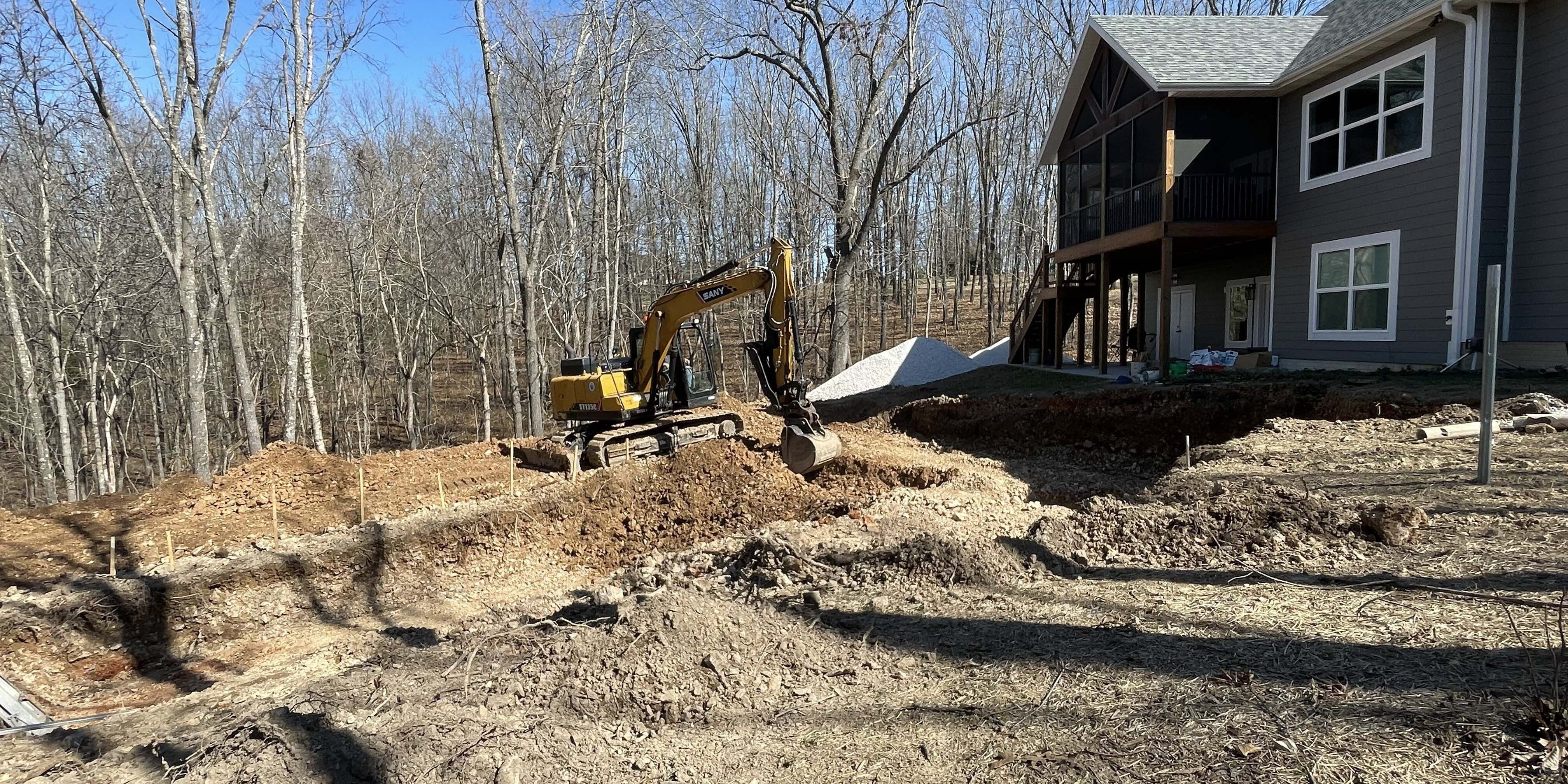
Yes. A sloped or wooded lot does not rule out a fiberglass pool. With proper grading, a drainage plan, and usually a retaining wall, a difficult slope becomes a stable, level, usable pool area. The retaining wall is normally the biggest cost variable, and in most cases you keep your trees.
Key points
- A fiberglass shell sets in one piece, so on a slope the critical work happens around the pool: build-up, support, and backfill timed with the water fill.
- A retaining wall is usually what makes a sloped lot work. It creates the level pad and is typically the single biggest cost driver.
- Drainage is planned from the start. On a hillside, water management is part of the design, not an afterthought.
- Mature trees can usually stay. An automatic cover handles the extra leaves on a wooded lot.
- A standard install runs about 4 to 6 weeks. A complex sloped project with a large wall and full outdoor living can run a few months.
A flat, open yard is easy to picture a pool in. A hillside covered in trees is not, so most homeowners have already decided the answer is no before they ever ask. After installing fiberglass pools on some of the toughest lots around, I can tell you a slope or a stand of trees is rarely what stops a project.
Here is how these yards actually come together.
Can a fiberglass pool be installed on a sloped lot?
Yes, and the way a fiberglass shell goes in is part of why it works well on a slope. The pool area is built up and supported so the finished space is level, the one-piece shell is set, then it is backfilled as the pool fills with water.
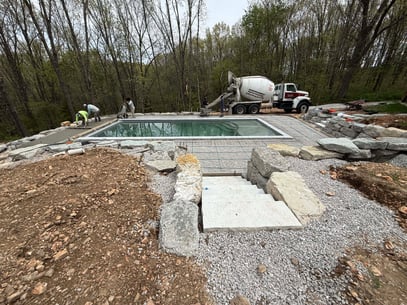
The work that makes a slope possible happens around the pool, not in it. The timing is the trick, because the support and the water go in together. Drop a shell into an unsupported slope and you have a problem. Plan the grade, the support, and the water together, and you have a backyard.
Why does a sloped or wooded lot feel like a dealbreaker?
Because the worries behind it are fair ones. Will the ground hold a pool on a slope? Where does the water go? Do the trees have to come out? Will the finished yard be usable, or just a pool wedged into a hill?
These are the right questions, and they come up on almost every sloped lot. Every one of them has an answer, and none of those answers is that you cannot have a pool.
Why does a sloped lot usually need a retaining wall?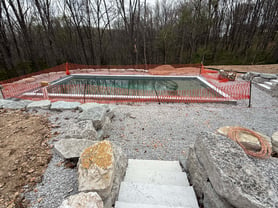
Because it creates the level ground the pool and patio need.
A retaining wall holds back the grade and forms the flat pad that the pool, patio, and seating areas sit on, so ground that used to run downhill becomes usable space.
On a sloped lot it is structural, not decorative, and it is usually the single biggest variable in your budget. A good builder sizes and plans it during the site evaluation, before giving you any final numbers.
Do trees have to be removed for a pool on a wooded lot?
Usually not all of them. I recommend designing around mature trees whenever possible, because the shade and privacy are often the best part of a wooded property.
The tradeoff is leaves, which is why so many homeowners choose to include an automatic pool cover on a wooded lot.
Only the trees sitting in the pool footprint or blocking equipment access typically have to go, and your builder should point those out during the walkthrough.
How do you handle drainage on a sloped lot?
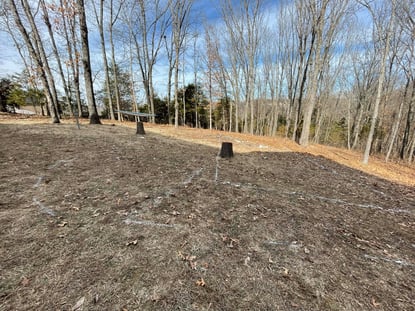
I always plan drainage from the start rather than assume it. Water moves downhill, so a good builder maps where it comes from, where it needs to go, and how the retaining wall, grading, and patio move it away from the pool and the house.
Done right, you never think about it again. Skipped, it shows up later as erosion, pooling, or pressure against the wall. This is where knowing the local terrain and soil matters more than any generic playbook.

What does a fiberglass pool on a sloped lot look like?
One of my favorite examples is a backyard we took on in Branson, Missouri. The lot was a steep, wooded slope with limited access, the kind most people assume cannot hold a pool. The family wanted a gathering space for their kids, friends, and relatives, with a fire pit they could use well past summer.
We built it in layers, coordinating the pool placement, water fill, backfill, and a large retaining wall together, then added colored concrete to match the home, plus landscaping, lighting, fencing, and the fire pit area.
-Jun-16-2026-02-43-37-3042-PM.png?width=706&height=263&name=Untitled%20design%20(14)-Jun-16-2026-02-43-37-3042-PM.png)
The hardest part was building the retaining wall and setting the pool at the same time on that slope. The result was a River Pools D36 with a tanning ledge and an automatic cover, in a complete outdoor living space where there used to be a hill nobody wanted to mow. Everyone thought that yard was a no. With the right plan, it became the best backyard on the street.

Does a pool on a sloped lot cost more, and take longer?
It can, and the reasons are predictable. The cost drivers are the size of the retaining wall, extra grading and build-up for a level pad, drainage work, limited access, and selective tree removal.
A complex site can also stretch the timeline, especially through fall or winter weather. None of that makes the project a bad idea. It means a sloped lot deserves a real site evaluation and an honest quote, not a quick guess.
If you want a starting range before we talk, you can use the build and price tool or the inground pool cost guide.
Sloped and wooded lot pool FAQ
Can you put an inground pool on a steep slope?
Yes. The pool area is built up and supported, usually with a retaining wall, to create a level, stable pad. A slope is a design and engineering question, not a reason to say no.
Is fiberglass a good choice for a sloped or hilly yard?
Often, yes. The shell installs in one piece on a prepared, supported pad, which makes for a controlled install on uneven ground. The site work around the pool is what matters most.
Do I need a retaining wall for a pool on a slope?
On most sloped lots, yes. The wall holds back the grade and creates the usable flat space for the pool and patio. It is typically the biggest cost variable on these projects.
Will I have to remove my trees to put in a pool?
Usually only the ones in the pool footprint or blocking access. A good builder designs around mature trees where possible, and an automatic cover helps manage the leaves on a wooded lot.
Does a sloped lot make a pool cost more?
It can, mainly because of the retaining wall, added grading, drainage work, and access. Every property is different, so your builder gives a detailed quote after seeing the site.
How long does it take to install a pool on a sloped lot?
A standard install runs about 4 to 6 weeks once the design is set. Sloped projects with a large retaining wall and full outdoor living features can run longer, sometimes a few months, especially through fall and winter.
About the author
Jason Cox is the owner and operator of River Pools of the Ozarks, an independent, locally owned River Pools franchise serving Southwest Missouri and Northwest Arkansas from offices in Nixa, Missouri and Centerton, Arkansas. A Missouri native who grew up on a family farm, Jason founded River Pools of the Ozarks in 2019 after installing a fiberglass pool for his own family. He specializes in fiberglass pools on challenging sites, from steep, wooded lots to tight-access yards.

From River Pools
River Pools manufactures fiberglass pool shells, which are available through a network of independent, locally owned installers, like Jason, who handle design and installation. We publish guides like this one so you can make an informed decision long before you request a quote. When you are ready, request pricing and we will connect you with the independent installer who serves your area.
