

This is one of the first questions many homeowners ask when considering an inground pool in northern states like Wisconsin, Minnesota, Michigan.
After all, winters in the Frozen Tundra of the North are no joke. Pools may sit under snow and ice for months at a time. Temperatures can swing from thirty below zero to above freezing within days, and the ground itself moves as it freezes and thaws throughout the season.
So it’s a fair concern.
The good news is that thousands of pools across Wisconsin and the Upper Midwest operate successfully year after year, despite long winters and brutal weather conditions.
Understanding what actually happens to a pool during our frigid winters can help explain why.
We covered this topic with Mike Bowers in depth on The Pool Guides Podcast. Check it out below.
How Do Inground Pools Survive Freezing Midwest Winters?
Properly installed inground swimming pools can perform very well in cold climates.
Pools across the northern states have been operating successfully for decades, even in regions like Wisconsin where the ground freezes deeply each winter (4-6 feet).
The key factors usually boil down to three things:
- proper pool installation
- adequate drainage and base preparation
- correct winterization procedures
When those elements are handled properly, brutal winter conditions rarely cause problems for an inground pool.
What Happens to a Swimming Pool During a Midwest Winter?
While pools can function very well in cold climates, they do experience several environmental forces during winter that are less common in warmer parts of the country.
Understanding these forces helps explain why installation practices and winterization procedures matter so much.
Freeze Expansion
Water expands by roughly 9 percent when it freezes.
If water is trapped inside plumbing lines or equipment during winter, that expansion can cause damage. This is why winterizing a pool involves blowing out plumbing lines and removing water from pumps, filters, and other equipment.
When winterization is done properly, freeze expansion rarely affects the pool structure itself.
When pool water freezes, it doesn’t only expand out, but it expands up too! If the water level is not kept at the proper height prior to freezing, it can expand up into pool coping, cantilevered concrete, or other pool components and exert enough force to create damage.
Frost Heave
In northern climates, moisture in soil can freeze and expand, causing the ground to lift slightly during winter.
This process, known as frost heave, is common in regions where frost lines extend several feet below the surface. In Wisconsin, on average we experience 4-6 ft of frost.
As temperatures warm in the spring, the soil settles again. Pools installed with proper base preparation and backfill materials are designed to accommodate this seasonal ground movement.
Groundwater Pressure
Another factor in northern regions is seasonal groundwater movement.
During spring thaw, melting snow and rain can temporarily raise groundwater levels around a pool. This increases hydrostatic pressure on the pool shell.
Modern pool installations typically account for this through drainage design and structural engineering.
The use of a sump pipe is critical to give pool owners a method to remove ground water around a pool.
Ice Sheet Movement
When a pool freezes over, a sheet of ice forms across the surface. As temperatures fluctuate, that ice can expand and contract slightly against the interior surface of the pool.
For this reason, most pools are not drained completely during winter. Maintaining water inside the pool helps balance pressure and support the structure.
How Do Different Pool Types Handle Freeze-Thaw Conditions?
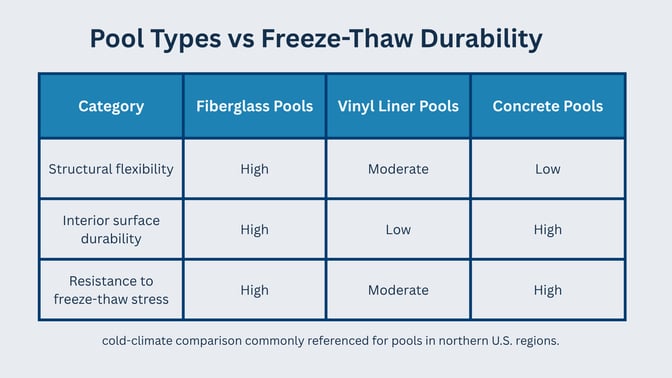
All major pool types, fiberglass, vinyl liner, and concrete, have been installed successfully in northern climates.
However, each type interacts with soil movement, temperature changes, and long-term wear somewhat differently.
Fiberglass Pools
Fiberglass pools are manufactured as a single molded shell with a smooth gelcoat surface.
One key characteristic associated with fiberglass pool shells is their structural flexibility. This allows the pool to move slightly with surrounding soil conditions without placing excessive stress on the shell itself.
The smooth interior surface also tends to resist algae growth and generally requires less long-term surface maintenance and is resistant to damage from ice in the pool.
Vinyl Liner Pools
Vinyl liner pools are built using steel or polymer wall panels with a vinyl liner acting as the interior surface.
This construction method has been widely used for decades and can perform well when installed properly.
However, the liner itself is a relatively thin material that is not as durable as the finish on either a fiberglass pool or a concrete pool and typically needs replacement periodically as part of normal ownership. Typically every 7 to 10 years.
Concrete Pools
Concrete pools are built on site and offer nearly unlimited design flexibility.
Their rigid structure provides excellent strength, and they have been installed successfully throughout northern climates for decades.
However, concrete pool interiors typically require resurfacing at some point during their lifespan to maintain appearance and watertight integrity. Typically every 15 to 20 years.

Will My Pool Crack During Winter?
One of the most common concerns homeowners have in northern climates is whether their pool might crack during winter.
It’s easy to see why people think this might happen. When we see water expand as it freezes, it’s natural to assume the same pressure could damage a pool structure.
In reality, properly installed inground pools are designed to handle seasonal conditions.
Pools are not solid blocks of water. During winter, most pools remain filled with water and are protected with a winter cover. Plumbing lines are cleared to prevent trapped water from freezing, and the structure itself is designed to handle environmental pressure from surrounding soil.
When problems do occur, they are more often related to installation issues or improper winterization, rather than winter conditions themselves.
Why is Proper Pool Installation So Important in Cold Climates?
In many cases, the long-term durability of a pool has more to do with installation quality than the climate where it is located. Mother Nature will.
Key factors include:
- proper excavation and base preparation
- effective drainage around the pool
- correct plumbing installation
- appropriate backfill materials
- thorough winterization procedures
When these elements are done correctly, pools can operate successfully for decades, even in regions with long, cold winters. One thing is certain, if there are any flaws in the installation process, Mother Nature will expose them once Winter Sets in.
Is it Worth Having a Pool in the Midwest?
Interestingly, many homeowners in the Upper Midwest find that the shorter swimming season actually makes pool ownership feel more special. It’s a true luxury!
After a long winter, warm summer days become something people truly appreciate. Backyard pools quickly become the center of family life, hosting gatherings, celebrations, and relaxing afternoons outdoors.
And when fall arrives again, the pool simply waits beneath its winter cover until the next season begins.
Final Thoughts
Midwest winters are tough on many things, but properly designed and installed swimming pools are built to handle the challenge.
By understanding how freeze expansion, frost heave, groundwater pressure, and ice movement affect a pool during winter, homeowners can make more informed decisions when planning a pool project in colder climates.
With the right installation and proper winter care, swimming pools throughout Wisconsin & the northern United States continue to provide enjoyment for generations of families.

Frequently Asked Questions
Will my pool crack during winter freezing?
In most cases, no. Properly installed pools are designed to handle winter conditions. Pools are typically left filled with water and covered during winter, which helps balance pressure inside the pool. When cracks occur, they are usually related to installation problems or improper winterization, not cold weather itself.
What happens to pool water when it freezes?
Water expands about 9% when it freezes. That’s why winterizing a pool is important. During winterization, plumbing lines are cleared and equipment like pumps and filters are drained so water cannot freeze inside them. Pool water itself may freeze on the surface, forming an ice sheet, but this typically doesn’t damage the pool structure.
What is frost heave and can it affect a swimming pool?
Frost heave occurs when moisture in the soil freezes and expands, causing the ground to lift slightly. In parts of the Midwest, frost can reach 4–6 feet deep. Pools installed with proper base preparation and backfill materials are designed to handle this seasonal movement without damage.
Should you drain a pool before winter?
No. Most pools should not be completely drained for winter. Keeping water in the pool helps balance pressure from surrounding soil and groundwater. Instead, pools are winterized by lowering the water level slightly, clearing plumbing lines, and installing a winter cover.
From the Author
I’m Mike Bowers, owner of Pool Pros Inc. in Green Bay, Wisconsin. For nearly 30 years, I’ve helped homeowners throughout the Upper Midwest design and install swimming pools that can withstand harsh northern winters.
Working in a region with deep frost and dramatic temperature swings has given me firsthand experience with how installation, drainage, and winterization affect the long-term durability of a pool. I wrote this article to help homeowners better understand how pools handle Midwest winters so they can plan their projects with confidence.

From the Manufacturer
At River Pools, we regularly hear from homeowners in northern states who wonder whether an inground pool can truly withstand harsh Midwest winters. It’s a fair question, when temperatures drop well below freezing and the ground itself moves during the freeze-thaw cycle, durability becomes a major concern.
Through our work with independent installers across cold-climate regions, we’ve seen firsthand how proper installation, drainage, and winterization practices allow fiberglass pools to perform reliably year after year, even in areas with deep frost and long winters.
If you’re considering a fiberglass pool and want to explore what it could look like in your backyard, the next step is connecting with a trusted independent installer in your area who can evaluate your yard and discuss options that fit your climate and goals.
Ready to start the conversation?

